Stage IIIB lung cancer does not make Walter White dangerous. Refusing money from Gretchen and Elliott does. That one pride-driven decision in episode five threads forward into lies, laundering, and a double life that claims everyone around him.
The Breaking Bad story runs on cause and effect like physics, not fate. Every twist is a consequence planted two or three episodes earlier. Rewatchers catch this machinery immediately, and it changes everything.
Most viewers finish the series convinced Walt got corrupted by circumstance. My take is that the corruption was structural before the first cook happens. The cancer gave it a deadline. Nothing more.
This article is for people who have already watched the show and those who want to understand the story well. The second watch is a completely different experience, and this is exactly why.
Walt Never Needed the Cancer to Break Bad
The standard read is that financial desperation plus terminal illness creates a sympathetic criminal. But the Gretchen and Elliott scene dismantles that read in real time.
Walt has a clean exit available. Old friends offer to fund his treatment and leave his family financially stable. He turns it down. Pride beats practicality, and the refusal is not subtle.
That choice reveals that Walt’s ego was already the primary operating system. The cancer was a trigger, not a cause. Pride is the product before the product is meth.
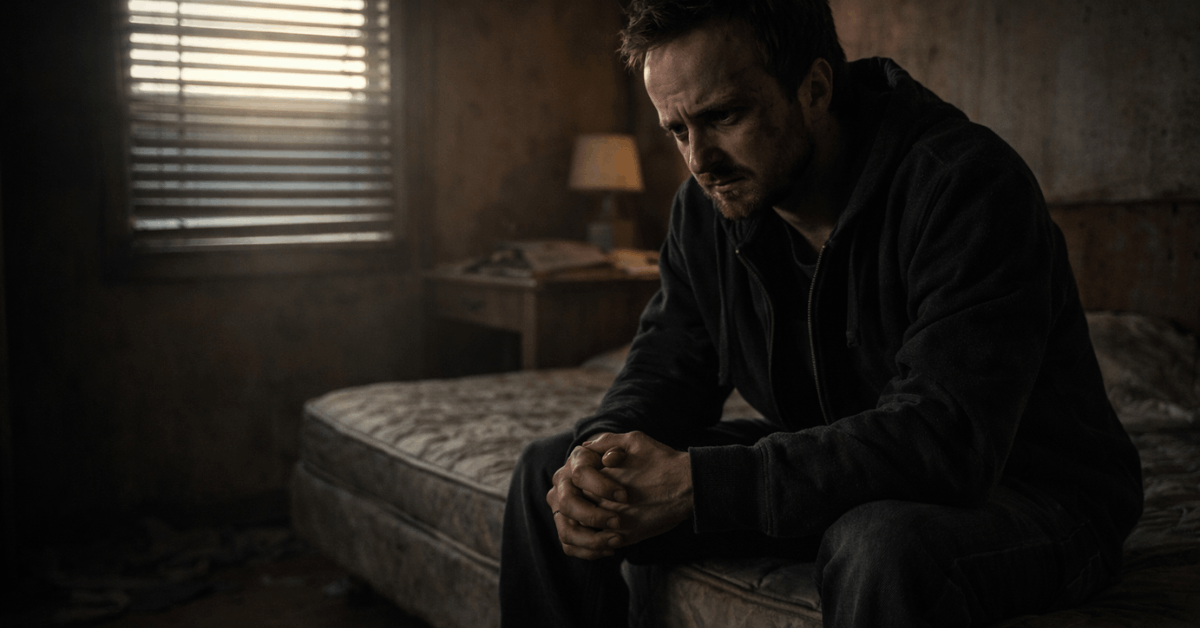
The Heisenberg Name Solves a Practical Problem, Then Becomes the Point
The Heisenberg identity starts as camouflage and ends as self-definition. Most analyses treat the transformation as a gradual slide, but the slide had already happened in that living room with Gretchen and Elliott.
What the Heisenberg persona does is give the ego a working name. A structure to inhabit. Once Walt tastes mastery, over chemistry or over people, the identity compounds fast.
The adrenaline of solving an “impossible” constraint is something the show depicts with uncomfortable precision. Each solution feels like a win. Each win demands fresh violence to hold the gains.
Walt’s Admission Near the Finale Reframes Every Prior Season
The line Walt delivers to Skyler near the end is the most important sentence in the show. He did it for himself. He liked it. He was good at it. He felt alive.
That admission rewrites every earlier justification. “I did it for my family” was never the real answer. Revisiting season one through that lens turns sympathy into something far more complicated. And that is what great storytelling does.
Every Walt Solution Is a Delayed Detonation
This is the insight most first-time viewers miss: Walt’s best ideas carry hidden timers. They work brilliantly in the short term. Then they detonate later and bigger.
Three examples pulled directly from the show’s cause-and-effect engine:
- Laundering through the car wash solves the immediate money problem and looks legitimate. It also drags Skyler into complicity and builds a paper trail that follows Hank for seasons.
- Swapping Gale for Jesse saves Walt’s life and keeps Jesse bound by guilt. It also hands Gus a motive to eliminate them both the moment the lab stabilizes without either of them.
- Weaponizing Hector Salamanca’s hatred takes down Gus in a move no one sees coming. It also removes the last stabilizing force in the operation, leaving only ambition, panic, and a widening blast radius.
The writers planted the detonators in the same episode as the solutions.
Also read: You Don’t Need to Know Star Wars to Love The Mandalorian Series
Domestic Scenes Carry More Weight Than Any Gunfight
Watch the car wash arc on a rewatch. Every dollar laundered is a dollar Skyler can no longer pretend not to know about. Her complicity grows in direct proportion to the business’s apparent legitimacy.
Dinner conversations, hospital payments, and charity websites measure the family’s erosion more accurately than any explosion. The gunfights are punctuation. The family dinners are the actual story.
Jesse Pinkman Is the Show’s Actual Moral Compass
Early episodes frame Jesse as chaos. A failed former student who knows the street and fumbles the lab.
But the Jesse Pinkman arc climbs steadily toward conscience while Walt descends toward domination, and that crossing is the structural spine of the entire series.
Their partnership is a warped parent-child bond that cuts deeper than either character understands. Walt needs Jesse’s deference. Jesse needs Walt’s approval. Both dynamics produce catastrophic results.
Jane’s Death Is Not What Most People Think It Is
Most viewers read the Jane scene as a tragic accident, and Walt passively witnesses. But Walt makes a choice. He could intervene. He does not.
That passive decision shatters Jesse’s sobriety, corrodes his trust, and sets off a mid-air collision above the city. One man standing still carries consequences measured across an entire season. The show never lets you forget Walt stood there and chose nothing.
What Brock’s Poisoning Proves About Walt’s Logic
Poisoning a child to manipulate Jesse is the moment Walt’s internal framework becomes completely irretrievable. The rational case he has constructed for every prior choice collapses here without a replacement.
Brock’s poisoning destroys what little faith Jesse still holds, becoming the fuse for the final split. After this point, Jesse’s arc is not about survival. It is about reckoning.
Three Antagonists, Three Different Kinds of Pressure
The three primary antagonists hit different nerves, so the squeeze never repeats a trick. Think of them as moving weights that rebalance the story every time Walt gains ground.
| Antagonist | What They Test | What Their Removal Reveals |
|---|---|---|
| Tuco Salamanca | Walt’s ability to survive chaos | Volatility is structural to this world, not exceptional |
| Gus Fring | Walt’s ability to operate inside a system | Empire requires structure and patience, not just talent |
| Hank Schrader | Walt’s ability to lie to people who love him | Competence lives on both sides of the law |
A one-sentence takeaway: each antagonist exposes a different layer of Walt’s self-deception, which is why removing all three still does not save him.
Tuco’s volatility escalates violence immediately and teaches Walt how terror functions in a room. After Tuco falls, the power vacuum tempts Walt to climb.
Why Gus Fring Is Walt’s Most Dangerous Mirror
Gus tests loyalty with precision and strains the Jesse partnership until it breaks. When Gus dies, the vacancy reveals what the empire always required: systems, not swagger.
Gus is the version of Walt’s ambition that actually worked. Structure, patience, and scale turned crime into an enterprise. Walt’s fatal error is believing he can replicate the outcome without replicating the discipline.
Hank makes the narrative honest because competence lives on both sides of the law. After the garage confrontation, every domestic scene doubles as evidence management, and the countdown accelerates without pause.
How the Breaking Bad Finale Answers Every Thread
September 29, 2013, closed the original run, and the ending works because it answers every thread without cheap redemption.
Money reaches the family through a coerced trust workaround. The crew dies under a remote-rigged assault. Walt’s final confession to Skyler removes the last layer of motive fog. The body falls among the machines that defined his second life.
No speechifying. No symbolic sunset. Just consequence playing out to its logical end.
The show’s complete episode and production archive is at AMC’s official series page, and IMDb’s Breaking Bad entry documents season-by-season ratings for anyone mapping critical reception across the run.
The finale lands because 62 episodes built toward it with discipline. A series ending can only be as strong as the cause-and-effect engine that precedes it. This one never misfires.
Questions People Ask About Breaking Bad
Q: Did Walt ever genuinely care about his family, or was it always about ego? Gretchen and Elliott offer in episode five answers to this earlier than most viewers realize. Walt had a clean exit that would have protected his family financially and medically. Pride rejected it. The family framing was always partly a cover for a deeper need to feel irreplaceable and exceptional.
Q: Is Jesse’s arc a redemption story? Calling it redemption undersells what the show does. Jesse never stopped having a conscience. He was manipulated, poisoned, and held captive by someone he trusted. What the finale gives Jesse is not redemption. It is escape. Those resolve very differently.
Q: Why does Hank matter so much structurally? Hank makes Walt’s wins feel legitimately dangerous rather than scripted. A competent investigator operating inside the family raises stakes far beyond a standard cop-and-criminal frame. The garage confrontation in season five works because both men have legitimate grievances, and neither is factually wrong about the other.
Q: What should rewatchers track that first-timers miss? Track the justifications across seasons, not the actions. The actions are obvious. The justifications mutate in ways that are easy to miss in real time. Line them up chronologically and watch how far the goalpost moves between season one and season five. That distance is the show’s real subject.
Q: Which season holds the tightest structural logic? My take is that season four runs 13 episodes and holds every thread without dropping one. The chess match between Walt and Gus across those episodes is the show operating at full capacity. If a structural weakness appears anywhere, it sits briefly in the early half of season five before Hank’s discovery pulls everything back into sharp focus.
Conclusion
Walt’s final admission to Skyler reframes every earlier choice, which is exactly why the second watch hits harder than the first.
Pride was the primary product from episode one, and meth was just the mechanism Walt built around it. Great television earns its ending across every episode that precedes it, and this show earned every frame of its cold, coherent close.
Track the justifications across a rewatch rather than the actions, and the collapse becomes astonishing in its coherence.