Shutter Island is a psychological thriller that explores trauma, identity, and psychological defense.
The story follows Teddy Daniels, a U.S. Marshal investigating a patient’s disappearance at a remote asylum.
What the Movie’s Ending Confirms is the truth behind Teddy’s real identity and the purpose of his investigation. This article breaks down the final scenes to explain what was real and what was constructed.

The Story as Teddy Understands It at the Beginning
This section explains how the film frames reality through Teddy’s point of view. It establishes the baseline needed to understand why the ending matters.
Teddy’s Mission and Role as a U.S. Marshal
Teddy arrives at Ashecliffe Hospital believing he is on an official assignment. He thinks he is investigating the disappearance of a missing patient named Rachel Solando.
His partner Chuck appears supportive and follows standard law‑enforcement behavior.
From Teddy’s perspective, the mission feels legitimate and urgent. This belief controls how he interprets every event.
Early Signs That Reality Is Unstable
Strange behavior from the hospital staff raises Teddy’s suspicions early. He experiences migraines, hallucinations, and recurring dreams.
Several patients react with visible fear or hesitation around him. These moments suggest instability but still support Teddy’s belief in a conspiracy. At this stage, the film encourages viewers to share his assumptions.
What the Ending Reveals About Teddy Daniels?
This section introduces the core revelation. It explains how the final act reshapes the entire narrative.
Teddy Is Actually Andrew Laeddis
The ending confirms that Teddy Daniels is not a real person. His true identity is Andrew Laeddis, a long‑term patient at Ashecliffe.
The Marshal persona is a psychological construction. It exists to protect him from overwhelming guilt and trauma. This reveal forces viewers to reinterpret every earlier scene.
The Investigation Was a Therapeutic Role‑Play
Doctors staged the investigation as part of a therapeutic experiment. Hospital staff actively supported the delusion.
Chuck is revealed to be Dr. Sheehan, Andrew’s psychiatrist. The goal was to help Andrew face reality and avoid a lobotomy. The ending confirms the role‑play reached its final limit.
Clues Planted Throughout the Film
This section shows how the twist is supported by earlier evidence. It proves the ending is consistent, not sudden.
Dreams, Flashbacks, and Symbolic Imagery
Andrew’s dreams repeatedly show his wife Dolores and intense fire imagery. These scenes reflect repressed memories, not imagination.
Water imagery connects directly to the death of his children. Fire represents destruction and guilt. The ending confirms these visuals were fragments of truth.
Dialogue and Behavior That Break Character
Patients pause or speak carefully around Teddy. One woman makes a clear silencing gesture toward him. Guards treat him with control, not respect.
These behaviors contradict his assumed authority. The ending confirms these reactions were based on his true patient status.
The Psychological Meaning Behind the Ending
This section focuses on mental health themes. It explains why Andrew created the Teddy identity.
Denial as a Survival Mechanism
Andrew could not accept responsibility for his wife’s actions. He could not live with the knowledge that she killed their children. His mind constructed an alternate identity to survive.
Teddy allowed blame to be redirected toward external enemies. The ending confirms denial as the central coping mechanism.
Trauma and Identity Fragmentation
Severe trauma fractured Andrew’s sense of self. Teddy had purpose, structure, and moral clarity. Andrew’s real life was filled with loss and self‑hatred.
The film shows how identity can break under psychological pressure. The ending confirms this split was complete and sustained.
The Lighthouse Scene Explained
This section clarifies the most misunderstood location in the film. It explains why the lighthouse matters.
What Teddy Expected to Find?
Teddy believes the lighthouse hides illegal experiments. He expects proof of mind control and violence. This belief supports his conspiracy theory.
It also protects him from confronting personal responsibility. His expectations are shaped entirely by his false identity.
What the Lighthouse Actually Represents?
The lighthouse contains medical records, not experiments. It is the place where truth is delivered directly.
Doctors explain Andrew’s past calmly and clearly. There is no coercion or trickery. The ending confirms the lighthouse as a symbol of confrontation, not danger.
What the Final Line Confirms?
This section explains the meaning of the final dialogue. It addresses the film’s deliberate ambiguity.
“Live as a Monster or Die as a Good Man”
Andrew asks whether it is worse to live as a monster or die as a good man. The question implies awareness, not confusion.
It suggests he understands the truth completely. The wording frames the issue as a moral choice. The ending confirms this moment is intentional.
A Conscious Choice, Not a Relapse
Andrew appears calm and composed after the revelation. His behavior suggests acceptance, not delusion. Doctors react with visible disappointment, not alarm.
This response implies they believe he understood reality. The ending confirms Andrew may be choosing forgetting over suffering.
How Supporting Characters Shape the Ending?
This section explains how other characters influence the outcome. Their roles support the final interpretation.
Dr. Cawley’s Ethical Gamble
Dr. Cawley believes in humane treatment over surgery. He risks professional credibility on the role‑play approach.
His goal is recovery without irreversible damage. The ending confirms his method reached awareness, if not healing. His failure is ethical, not procedural.
Dr. Sheehan’s Emotional Role
Dr. Sheehan stays close to Andrew throughout the experiment. He builds trust by playing Chuck. His final reaction shows genuine emotional conflict.
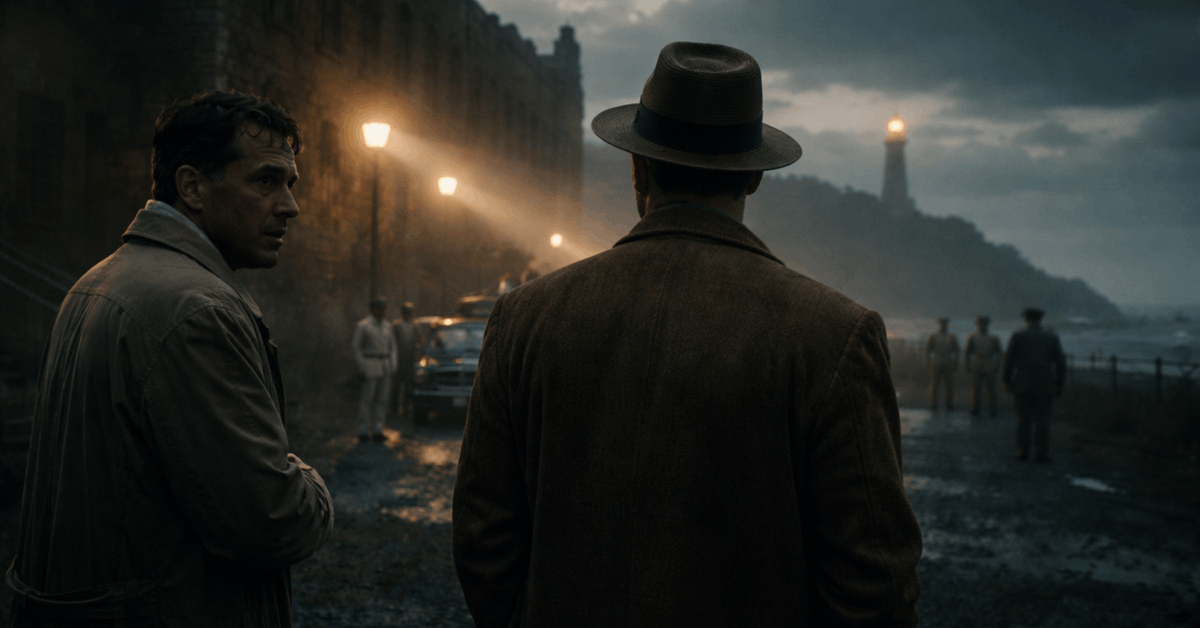
He believes Andrew recognized the truth. The ending confirms Sheehan’s role as both doctor and observer.
What the Ending Confirms About Reality and Truth?
This section connects theme and character. It explains the film’s deeper message.
Truth Does Not Guarantee Healing
Andrew confronts the truth about his past. This awareness does not repair his mental state. The emotional damage remains overwhelming.
The film rejects the idea that truth automatically brings relief. The ending confirms healing requires more than knowledge.
Reality Can Be Rejected by Choice
The film suggests rejection can be intentional. Andrew may choose lobotomy as an escape from guilt. This decision is shown as tragic, not cowardly.
It is framed as a rational response to unbearable pain. The ending confirms choice plays a role even in mental collapse.
Why the Ending Remains Effective?
This section explains why the ending continues to resonate. It focuses on structure and restraint.
Ambiguity Without Confusion
The film leaves room for interpretation without contradicting facts. All evidence supports Andrew’s true identity.
Ambiguity exists only in his final decision. This balance keeps the story grounded. The ending confirms careful narrative control.
A Closed Story With an Open Question
The story resolves its central mystery clearly. Andrew’s past and condition are confirmed. What remains is a moral question, not a factual one.
This distinction gives the ending weight. The ending confirms why the film invites discussion.
A Final Look at Truth, Choice, and Consequence
The required keyword appears again here: What the Movie’s Ending Confirms. The ending confirms that Andrew Laeddis understood who he was. It also confirms that understanding did not free him from pain.
His final choice reframes the entire story as a tragedy of awareness. The film closes by questioning whether remembering is always better than forgetting.