You choose a streaming platform based on how you watch, not on how many titles it advertises.
This guide explains how to choose the right streaming platform by focusing on content structure, viewing tools, and everyday usability.
You learn what actually matters before committing your time and money.
Understand What You Actually Watch
You should start by identifying your real viewing habits. This helps you avoid paying for content you rarely use.
- Movies or TV series focus: Decide if you mainly watch standalone films or long-running series, since platforms often prioritize one over the other.
- Completed vs ongoing shows: Choose platforms that clearly separate finished series from ongoing ones to avoid waiting gaps.
- Preferred genres: Look at the genres you watch most, so recommendations stay relevant.
- Originals vs licensed titles: Determine whether exclusive originals matter more than broad third-party libraries.
- Viewing order needs: Check whether you often follow a chronological order or an episode-by-episode guide for complex stories.
Content Depth and Catalog Structure
A large catalog is only useful if it is complete and stable. You should focus on depth, not just title count.
- Library size: Check whether the catalog offers enough variety to support long-term viewing, not just short visits.
- Full-season availability: Ensure complete seasons are available, especially for story-driven series.
- Title rotation: Frequent removals can interrupt viewing and rewatch plans.
- Franchise completeness: Look for platforms that host entire franchises instead of scattered entries.
- Rewatch support: A stable catalog lets you revisit episodes with guides, summaries, or explanations.
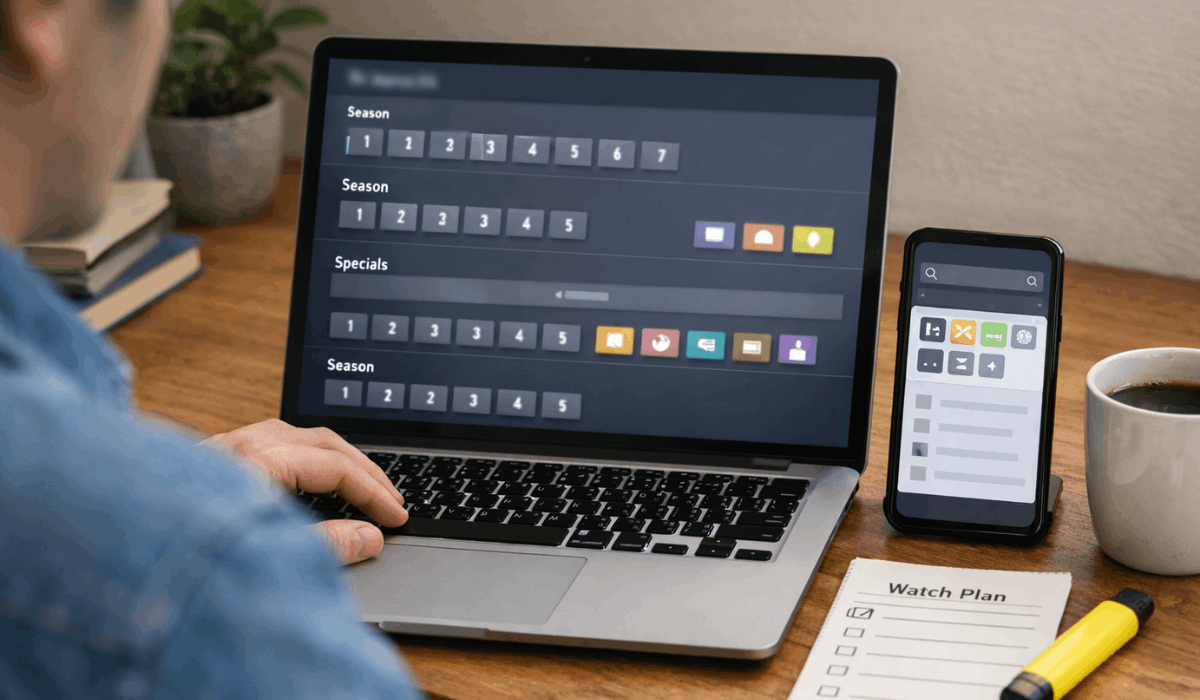
Episode Guides and Viewing Order Support
A clear episode structure helps you follow the story without confusion. Good guides reduce missed details and viewing errors.
- Season and episode labeling: Accurate numbering helps you know exactly where to start and continue.
- Chronological order options: Some stories require a specific order beyond release dates.
- Special episodes and extras: Bonus content should be clearly separated from main episodes.
- Recap handling: Built-in recaps help you return after breaks without rewatching full episodes.
- Device consistency: Episode order should remain the same across TV, mobile, and desktop apps.
Recommendation System and Discovery Tools
Discovery tools decide what you see after you finish a show. A strong system saves time and reduces endless scrolling.
- Personalized recommendations: Suggestions should reflect what you actually watch, not just popular titles.
- Genre and sub-genre filters: Detailed filtering helps you narrow choices quickly.
- Search accuracy: Reliable search should find exact titles, seasons, and episodes without errors.
- Relevant vs trending results: Recommendations should balance personal relevance with new releases.
- Control over suggestions: You should be able to reset or adjust recommendations when tastes change.
User Experience and Interface Design
The interface decides whether you enjoy using the service every day. Small design details affect speed and clarity.
- Navigation simplicity: Menus should be easy to understand and quick to access.
- Continue-watching accuracy: Playback must resume exactly where you stopped.
- Profile management: Separate profiles keep recommendations accurate.
- Watch history visibility: You should clearly see what you have already watched.
- Cross-device syncing: Progress must stay consistent across all devices.
Streaming Quality and Technical Reliability
Quality is not just about resolution. Stable playback matters more than peak specifications.
- Video resolution options: You should be able to choose quality levels based on your connection.
- Audio formats: Clear audio improves dialogue and overall viewing.
- Stability during peak hours: Streaming should remain smooth when traffic is high.
- Offline downloads: Downloads help when internet access is limited.
- Data usage controls: Settings should help you manage bandwidth and limits.
Pricing, Plans, and Flexibility
Price should reflect how often you actually watch. Flexible plans help you avoid overspending.
- Monthly vs. annual plans: Choose a payment cycle that matches your commitment level.
- Ads vs ad-free tiers: Decide whether lower cost or uninterrupted viewing matters more.
- Household and profile limits: These limits determine how many people can use a single account.
- Trial or cancellation policies: Easy cancellation reduces financial risk.
- Regional price differences: Costs can vary by location.
Suitability for Explainers and Deep Dives
Some platforms support a better understanding than others. Your viewing style should align with the platform’s structure.
- Complex story tracking: Clear layouts help you follow layered narratives.
- Rewatch support: Stable catalogs make revisiting episodes easier.
- Episode metadata clarity: Accurate details help with guides and summaries.
- Older season access: Past seasons should remain available.
- Long-running title stability: Ongoing series should stay complete.
Availability in Your Region and Travel Access
A strong platform still fails if key titles are missing. Regional rules directly affect access.
- Country-specific catalogs: Available titles can vary by region.
- Language availability: Language options depend on location.
- Travel access rules: Temporary travel may limit access to content.
- Account portability: Some accounts work across borders; others do not.
- Release timing differences: New content may arrive later in some regions.
Subtitle, Dub, and Accessibility Quality
Accessibility affects how well you understand content. Poor subtitles reduce clarity.
- Subtitle accuracy: Timing and wording must match dialogue.
- Dub availability: Dubs should match your preferred language.
- Caption types: Closed captions and subtitles serve different needs.
- Audio descriptions: Descriptions support visually impaired viewers.
- Font and readability controls: Text size and contrast should be adjustable.

Household Features and Family Controls
Shared accounts need structure. Controls prevent viewing issues and mixed data.
- Separate profiles: Each person should have their own profile.
- Kids mode: Child-safe settings limit unsuitable content.
- PIN protection: Locks mature profiles from access.
- Viewing restrictions: Limits help manage screen time.
- Household rules: Shared settings reduce confusion.
Device Compatibility and App Performance
Your devices shape the real experience. Poor apps cause daily frustration.
- Smart TV support: Apps should work smoothly on major TV brands.
- Mobile and desktop access: Viewing should be consistent across screens.
- Console and stick support: Expanding compatibility increases viewing options.
- App stability: Updates should improve performance, not break it.
- Casting options: Screen sharing adds flexibility.
Add-Ons, Bundles, and Channel Integrations
Bundles save money only when you use them. Extra add-ons can complicate billing.
- Service bundles: Bundles may reduce total costs.
- In-app channels: Add-on channels expand content choices.
- Billing structure: Single billing is easier to manage.
- Add-on control: You should be able to cancel extras easily.
- Value comparison: Standalone subscriptions may be cheaper.
Final Takeaway
Choosing the right streaming platform depends on how you watch, what you follow, and how much control you need.
When you match features, content structure, and pricing to your real habits, you avoid wasted subscriptions and viewing frustration.
Review your current platform, compare it against these criteria, and adjust your subscriptions to improve your streaming experience now.