Most people pick a streaming service the same way they pick a gas station: whatever’s closest, whatever everyone else uses.
Then they spend three months paying for something they open twice and quit watching twenty minutes in.
The platform simply wasn’t built for how you actually watch things. A binge-watcher who finishes whole seasons in a week needs a completely different infrastructure than someone who watches one episode every few nights and needs a solid recap to get back in.
So before you sign up for anything, here’s the framework that actually narrows this down.
Start With How You Watch, Not What’s Trending
Nobody asks this question first. They go straight to “what’s on it?” and miss the layer underneath.
Do you mainly watch movies or TV series? This matters more than it sounds. Some platforms heavily prioritize originals and build around episodic content, while others maintain a wider film library.
If you mostly watch standalone films, a series-heavy platform with 12 originals launching per month isn’t serving you as well as it looks.
Completed vs. Ongoing: The Gap Most People Don’t Check
Here’s a specific viewing habit that rarely gets discussed: the difference between watching completed series versus following ongoing shows.
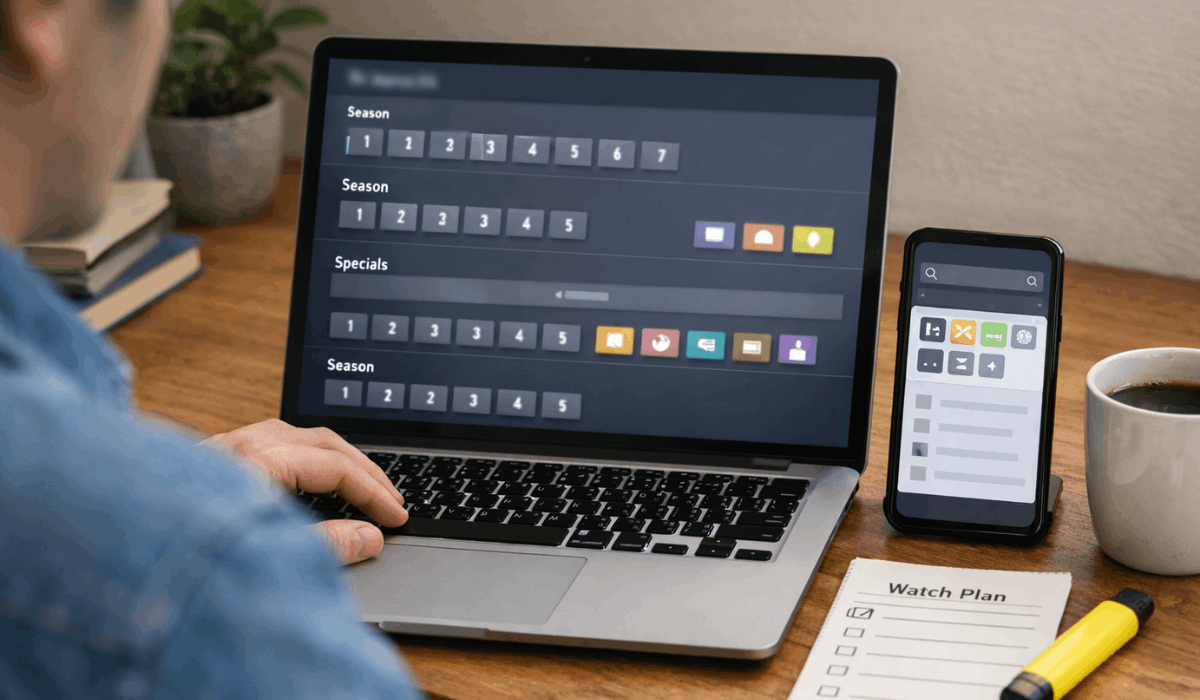
If you prefer to watch a finished series straight through without waiting, checking whether a platform holds the complete run matters more than whether it has the latest season of something still airing.
A platform might have seasons 1 through 4 of a show while season 5 is licensed elsewhere. You’ll discover this mid-binge.
Franchise completeness is related. Some platforms hold scattered entries from a franchise rather than the full catalog. If you plan to watch an extended universe in order, a gap in the middle breaks the whole experience.
Originals vs. Licensed Libraries: Where I’d Actually Put My Money
I think the industry oversells originals as a reason to subscribe to anything. My take: a platform with 500 licensed titles you actually want to watch beats one with 50 originals you’ll sample and abandon.
Licensed libraries have a track record. You can verify before you subscribe whether specific titles are on the platform using a tracker like JustWatch, which searches availability across services by region in real time.
Originals are a harder call. You can’t assess them before they exist, and plenty of high-profile launches have turned out to be one-episode experiments.
Catalog Depth Matters More Than Title Count
A catalog with 10,000 titles sounds impressive. A catalog where 3,000 of them rotate out every quarter is a different experience entirely.
Title rotation is one of the least discussed factors in picking a platform, and it quietly affects rewatching, following guides, and finishing a series you paused mid-season.
If a platform rotates content frequently, something you saved to your watchlist three weeks ago may simply be gone when you come back to it.
Full-season availability sits right next to this. Platforms don’t always carry every season of a series.
Some carry recent seasons only, which makes following older storylines frustrating for anyone watching with a guide or returning to a complex show after a long break.
What Rewatch Support Actually Looks Like
Strong rewatch support involves three things working together:
- A stable catalog that doesn’t remove titles you’re mid-way through
- Clear watch history so you can see exactly what you’ve already seen
- Accurate continuous-watching that picks up from your real stopping point, not from a few minutes back
Most people don’t think about rewatch potential until they want to revisit something. By then, they’re already frustrated by how much has disappeared from the library.
Also read: Why Netflix Keeps Recommending the Same Stuff and How to Escape the Loop
The Interface Will Either Help or Quietly Frustrate You Every Day
Technical specs are easy to compare. Interface design is harder to evaluate before you’re inside it, and it shapes the entire experience over time.
Navigation simplicity determines how fast you can get from opening the app to actually watching something.
Some platforms bury episode lists under multiple menus. Others surface them immediately. The difference feels small on day one and significant on day ninety.
Continue Watching Has a Frustrating Design Flaw Nobody Fixes
I’d argue that Continue Watching is the most useful feature on any streaming platform and also the most consistently broken one.
Most platforms surface everything you’ve started without any mechanism to distinguish between “I paused mid-episode” and “I watched two minutes and decided against it.” The row fills up with titles you never intended to finish.
The fix, on most platforms, is manually removing titles from the row. A few platforms have added this. Most haven’t prioritized it because the row increases session depth, which looks good in their internal metrics.
Recommendation Systems That Actually Work for You
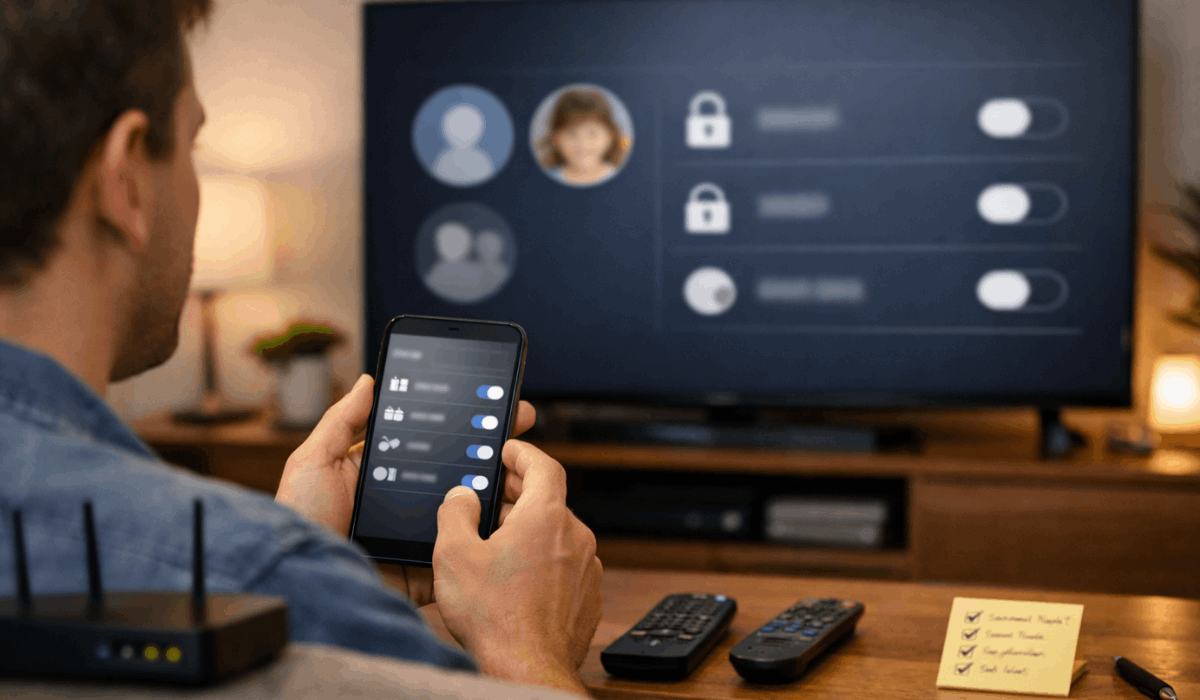
Personalized recommendations work well only when the input is clean. A shared account without separate profiles is pooling behavioral signals from multiple people.
The algorithm can’t distinguish between a teenager watching action films and a parent watching documentaries. Both get confused suggestions.
Key things worth checking before committing to a platform:
- Can you reset recommendations when your tastes shift or a profile gets contaminated by someone else’s viewing?
- Are there sub-genre filters that go deeper than “Action” or “Drama”?
- Does search reliably return specific episodes, not just series titles?
Quality Settings You’ll Actually Use
Resolution and audio specs are easy to market and easy to take at face value. The practical question is whether quality remains stable during peak hours, not just during a speed test at noon.
Stability during peak hours is where streaming quality often drops in real-world use, and it’s rarely part of the marketing comparison.
| Feature | Why It Actually Matters |
|---|---|
| Offline downloads | Lets you watch without relying on connection stability |
| Data usage controls | Critical for mobile viewers on capped plans |
| Video resolution options | Lets you manage quality vs. load time manually |
| Audio format quality | Affects clarity in dialogue-heavy content |
| App performance across devices | Determines daily usability, not just peak specs |
The offline download detail most platforms leave out: downloads expire. Some by time limit, some when licensing changes.
A file saved to your phone stops playing when the rights key expires, even if the file is still there. Check expiration policies before downloading for travel.
App Performance Across Devices
Your smart TV app, mobile app, and browser version of the same platform can behave differently. Features available on mobile may be absent on TV.
Subtitle customization, playback speed, and advanced settings are most commonly available in the mobile app and least commonly available on TV apps.
If you primarily watch on a smart TV and a feature matters to you, verify it exists in the TV app specifically before assuming the platform supports it.
Pricing Logic That’s Worth Actually Running
Monthly vs. annual plans are a straightforward calculation, but the math only works in your favor if you watch consistently across the whole year.
An annual plan on a platform you’ll pause in summer costs more than twelve individual monthly payments on a platform you switch on and off by season.
Ads vs. ad-free tiers depend on what you’re watching, not just how much you’re paying. A film with a mid-point ad break is a different experience from a twenty-minute episode with one.
The ad-tier experience varies more by content type than most comparisons acknowledge.
A few things worth verifying before subscribing:
- Household and profile limits on the plan you’re considering, since platforms have tightened sharing rules recently
- Cancellation policies, which vary from instant to end-of-billing-period depending on where you signed up
- Regional pricing, since the same plan can cost meaningfully different amounts depending on location
Accessibility and Language Features That Narrow the Field Fast
If you watch content in multiple languages or rely on subtitles, subtitle accuracy and dub availability can override almost every other factor.
Subtitle quality varies by title, not just by platform. A platform may have excellent subtitles on its originals and inconsistent quality on licensed content from other regions.
Closed captions and standard subtitles serve different purposes, and the distinction matters if you’re watching in a noisy environment or if you rely on them for accessibility.
Netflix’s accessibility documentation covers how their subtitle and audio description features work, which is a useful reference point for understanding what to look for when comparing other platforms.
Audio descriptions for visually impaired viewers, font size controls, and contrast adjustability are still inconsistently supported across platforms. If any of these matter in your household, verify support before subscribing rather than assuming parity.
Questions People Ask About Choosing a Streaming Platform
Q: Is a bigger library always better when comparing streaming services? Library size matters less than stability and depth. A catalog of 10,000 titles that rotates constantly is less useful than 3,000 titles that stay available consistently. Check whether complete seasons of shows you want exist on the platform, not just whether the platform has the title listed.
Q: Can I use the same streaming account when I travel internationally? Travel access rules vary by platform and sometimes by subscription tier. Some accounts work across borders with no change; others restrict catalog access to your home region. Check the specific platform’s policy before a trip, because catalog differences abroad can be significant.
Q: How do separate profiles actually improve recommendations? Each profile tracks its own watch history and behavioral signals independently. When one account pools signals from multiple viewers, the algorithm receives contradictory input and suggestions become generic. Separate profiles give the recommendation engine a single consistent viewer to model, which noticeably improves suggestion quality over time.
Q: Are ad-supported tiers worth it for watching movies specifically? Mid-film ad breaks affect movies more significantly than episode breaks in a series. For film-heavy viewing, the disruption cost is higher. The value of an ad-free tier depends on what you watch most, not just how much you’re willing to spend.
Q: How do I know if a platform will have the titles I want before I subscribe? Use JustWatch or a similar availability tracker to search specific titles by region before committing. Most platforms also offer a trial period. If a trial isn’t available, monthly plans with easy cancellation are lower risk than annual commitments on an untested service.
Conclusion
The platform that works for you is the one that matches how you actually use it on a Tuesday night when you’re tired and have forty minutes.
Optimize for that version of yourself, not the enthusiastic weekend binge-watcher you imagine you’ll be. The subscription cost is small. The daily friction of using the wrong tool is constant.