Tenet is one of Christopher Nolan’s most challenging films for general audiences. The Movie Plot Explained Without Overthinking approach helps you follow events, timelines, and character actions without relying on fan theories.
Instead of decoding hidden meanings, this guide focuses on what is shown on screen. The goal is to help you understand the story mechanics clearly and confidently.
The Core Idea of Tenet Is Not Time Travel
The film is built around inversion, which differs from classic time travel. Understanding this distinction allows you to follow the timeline logic without confusion.
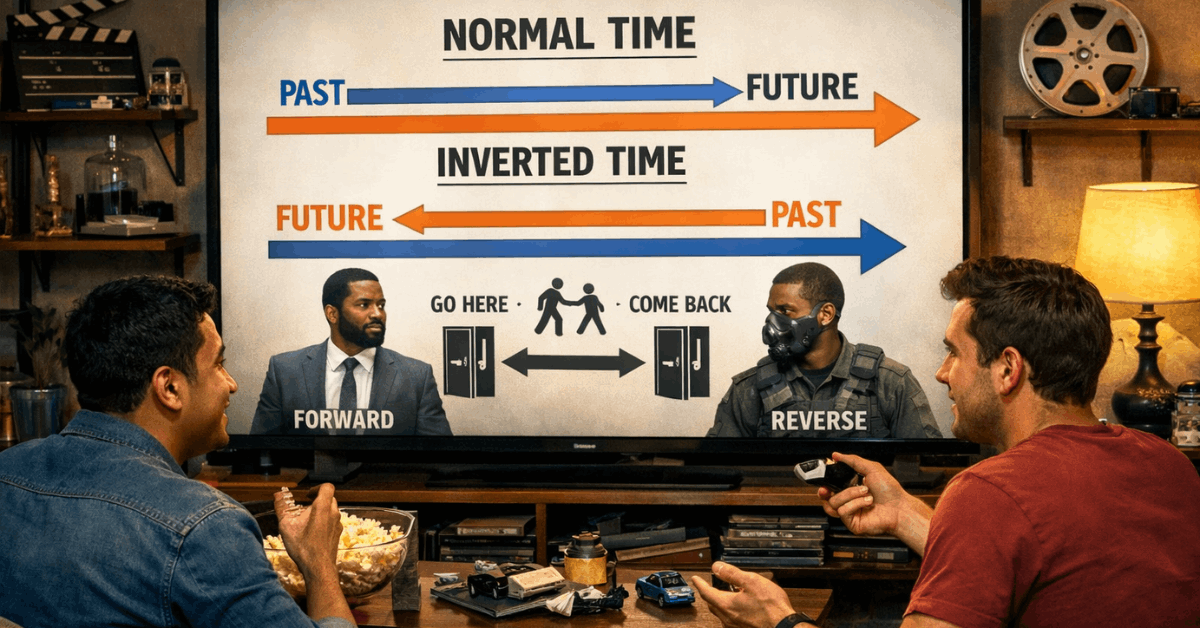
How Inversion Works?
Inversion reverses the entropy of objects or people, so they move backward through time. This does not involve jumping to another date or timeline.
A person experiences events in reverse order while still existing in the same world.
Normal actions feel unfamiliar because cause and effect appear flipped. The returning bullet sequence early in the film introduces this rule visually.
Why the Future Wants to Invert the Past?
The future world is facing environmental collapse and resource loss. Scientists discover inversion technology and send objects back in time.
Their belief is that reversing entropy can prevent their extinction. Andrei Sator becomes their point of contact in the present. This decision places the current world at risk of total destruction.
The Characters Drive the Structure
Tenet uses character roles rather than traditional exposition. Knowing each role helps you track timeline shifts and motivations.
The Protagonist: The Anchor
The Protagonist is a CIA agent recruited into the Tenet organization. He learns inversion rules gradually, just as the audience does.
His mission evolves from intelligence gathering to global prevention. He eventually realizes he created Tenet in the future. This makes him both the starter and resolver of the loop.
Neil: The Key to the Ending
Neil acts as a knowledgeable ally with unexplained insight. He understands inversion far earlier than the Protagonist.
The film later confirms he was recruited in the future. His actions are shaped by a known outcome rather than uncertainty. His sacrifice completes a closed causal loop.
Sator and Kat: Power and Rebellion
Sator is a terminally ill arms dealer connected to the future. He believes his death should trigger the end of the world. Kat, his wife, lives under control and emotional abuse.
Her loyalty breaks when she realizes her son’s future is at stake. Her decision directly prevents the activation of the Algorithm.
From Opera Siege to Freeport: The Linear Start
The opening section unfolds in forward-moving time. These scenes establish the rules before inversion dominates the narrative.
The Opera House Attack
The film opens with a terrorist siege at an opera house in Kyiv. The Protagonist participates in a covert extraction mission.
During the chaos, he witnesses an inverted bullet. After capture and testing, he proves his loyalty. This event connects directly to later inverted actions.
The Freeport Heist and Turnstile Reveal
The Freeport sequence introduces the inversion machine called a turnstile. The explosion is shown once in forward time.
It is later replayed from the inverted perspective. The Protagonist realizes he fought himself during the event. This confirms that past and future actions coexist.
Timeline Reverses: Highway Chase to Sator’s Trap
This portion shifts the film fully into dual timelines. Viewers must recognize repeated events from different directions.
The Highway Heist in Two Directions
The highway chase appears chaotic in the forward timeline. Vehicles behave unnaturally, and actions seem irrational.
Later, the same sequence is replayed with the Protagonist inverted. His earlier confusion becomes logical. This scene demonstrates how cause and effect reverse under inversion.
Into the Inverted World
After being forced through a turnstile, the Protagonist enters reverse time. Environmental elements like fire and wind behave differently.
He witnesses events he already experienced earlier. Saving Kat requires traveling backward through familiar moments. This reinforces the fixed nature of the timeline.
The Temporal Pincer and Final Events
The climax relies on a military strategy that uses time itself as a weapon. Understanding this strategy simplifies the final act.
Red and Blue Teams in Stalsk-12
Tenet deploys a temporal pincer movement using two teams. The red team moves forward in time. The blue team moves backward simultaneously.
Their actions inform each other across timelines. Visual markers help distinguish each group’s direction.
Neil’s Inverted Timeline and Sacrifice
Neil inverts one final time to unlock a critical gate. He is the masked soldier seen earlier in the film.
His death occurs before his friendship begins chronologically. This confirms he knowingly accepts his fate. His role closes the timeline cleanly.
The Full Timeline in Order
Viewing the film chronologically removes much of the confusion. This section presents events without inversion jumps.
Sator’s Past and Kat’s Pain
Sator discovers the Algorithm components buried decades earlier. He communicates with the future through dead drops.
Kat’s emotional isolation grows as Sator gains power. Her resentment builds quietly throughout the story. These events motivate her final decision.
From Freeport to Turnstile Events
The Freeport explosion becomes the central pivot point. The Protagonist moves backward through known events.
Each inverted action explains earlier mysteries. The highway sequence becomes clear in hindsight. This section ties timelines together.
Final Mission and Reveal
The Stalsk-12 mission completes the loop. The Protagonist understands his role as Tenet’s founder.
Neil’s farewell confirms their friendship spans years outside the film. Kat kills Sator at the right moment. The Algorithm is safely hidden.
Visual Clues That Keep You Oriented
Tenet includes consistent visual markers to guide attentive viewers. Recognizing them reduces confusion.
Color Patterns: Red and Blue
Red and blue colors indicate time direction. Uniforms, doors, and maps follow this system.

Red signifies forward motion. Blue signifies inversion. These cues appear most clearly during the final battle.
Inverted Sound and Movement
Inverted characters require oxygen masks. Their speech sounds distorted. Movement appears unnatural and resistant.
These effects indicate reversed entropy. They help identify time direction during complex scenes.
Understanding Tenet Without Forcing the Puzzle
Tenet follows strict internal rules rather than hidden symbolism. The Movie Plot Explained Without Overthinking approach keeps attention on actions, timelines, and character decisions.
You do not need to decode every detail to understand the story. Once the loop closes, the narrative resolves logically.