In stories about cosmic events, explanations feel satisfying until they fail to comfort. In The Leftovers, comfort arrives when characters stop chasing certainty and choose each other instead.
After three seasons, the series lands on everyday tenderness, which answers more than any grand theory ever could.
What The Ending Actually Says
Across the finale, the narrative pivots from “what happened” to “what matters next.” The episode puts you in a room with two people who carry unbearable histories and asks a simple question: will they choose connection over control. Acceptance becomes action. Love becomes proof.
Kevin tells Nora, “You’re here.” That sentence is the key. He validates presence, not evidence, which turns the last scene into The Leftovers ending explained without a lecture. Meaning sits in a cup of tea, a steady gaze, and a decision to believe.
Key Meanings In The Finale
Shortly after the opening credits, the finale builds a quiet argument for living well without absolute answers. The ideas below shape how you read every beat in “The Book of Nora.”
Love Over Answers
The reunion prioritizes care over certainty, which reframes earlier obsessions with maps, rituals, and prophecies.
When Kevin accepts Nora without demanding verification, the story asserts that the relationship is the outcome worth defending. In that choice, Kevin and Nora’s reunion becomes the thesis statement.
Acceptance Of Ambiguity
The Sudden Departure remains unexplained, and that restraint is thematic, not evasive. Accepting that some wounds never fully resolve allows you to build a life anyway. Acceptance of answers does not minimize pain; it relocates purpose into daily commitments.
Nora’s Journey To Peace
Nora chooses a machine, then claims a passage into a second world where her family survived as a unit. Truth aside, the important movement is internal: she faces the shape of her loss and stops bargaining with it. Present-tense living finally becomes possible.
Kevin’s Messiah Arc, Deflated Wisely
Earlier seasons flirt with miracles and missions, yet the ending strips the theatrics away. Kevin’s messiah trials collapse into ordinary decency, which is harder and braver. Kevin’s messiah arc ends not through spectacle but through patience and presence.
Nora’s Story: True Or Not
Because the finale refuses to validate Nora’s account externally, interpretation becomes part of the drama. Read both paths, then return to Kevin’s answer.
If Nora’s Story Is True
A second world exists, inverted by percentages, where pilots are scarce, and families rebuild from a 98 percent absence. That frame fits Nora’s temperament: rational in method, relentless in pursuit, suspicious of performance masquerading as faith.
The story also rhymes with prior near-death interludes, where perception and reality brushed edges that felt empirical rather than mystical. In this reading, the analysis of The Book of Nora highlights survival skills shaped by grief and powered by resolve.
If Nora’s Story Isn’t True
The machine becomes a crucible for grief rather than a portal. Nora could have nearly drowned, experienced a liminal state, and emerged with a narrative that lets her keep living.
A self-authored myth can still heal, especially for someone whose life was shattered in one afternoon. The lie would not be malicious; it would be merciful.
Why Kevin’s Line Matters
Because belief can harm or heal depending on where it points, the finale tests belief against consequences. Kevin does not endorse a cult, a prophecy, or a new gospel. He anchors belief in Nora herself.
“You’re here” removes the debate’s oxygen and replaces it with commitment. Love as the final answer is not soft; it is disciplined, specific, and accountable.
Symbols That Quietly Carry Weight
A finale rich in quiet choices still speaks through objects. Treat each symbol as a nudge toward the same destination: trust, release, and return.
The Goat
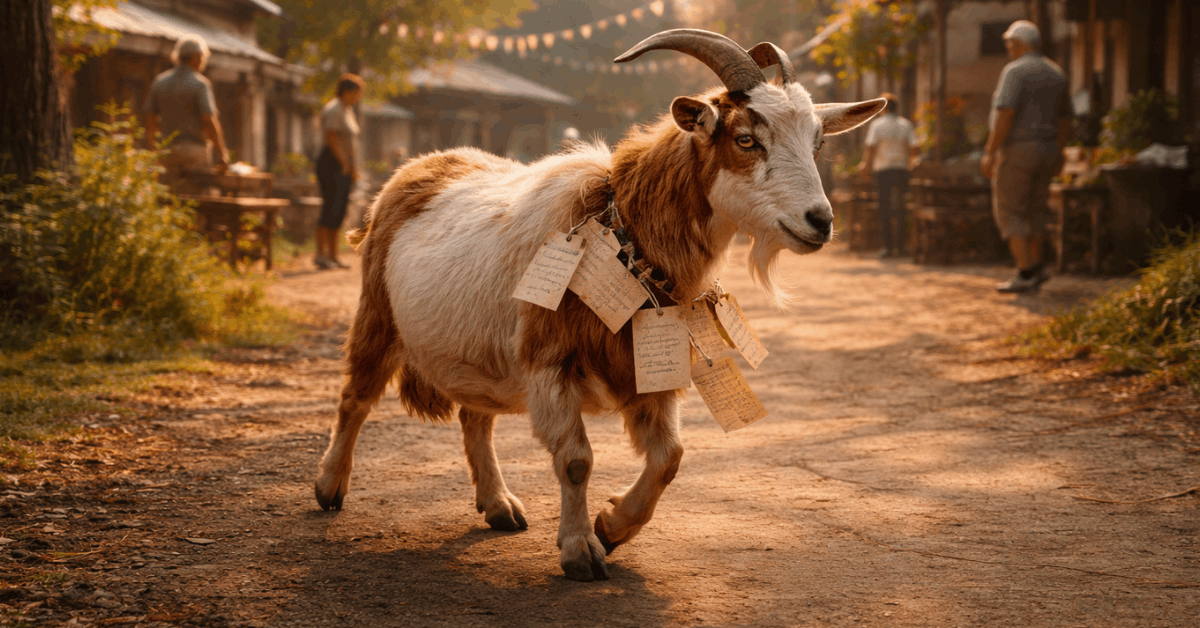
A goat burdened with written sins wanders through the celebration and out of frame. The gesture feels absurd, yet it acknowledges how communities need rituals to offload shame. You do not need metaphysics for the act to matter. People breathe easier after naming what hurts.
The Pigeons
Nora’s birds circle back after the wedding, despite delays and detours. Their return resists efficient tracking, which is the point.
Messages of care do not follow your timetable, yet they arrive often enough to keep hope alive. Symbolism of the goat and pigeons condenses the finale’s thesis into motion you can watch without decoding charts.
The Tea
Two cups on a table turn an epic into a kitchen scene. Ordinary hospitality defeats apocalyptic spectacle, because daily care scales. Tiny rituals help relationships survive unanswerable questions.

How The Ending Rewrites The Whole Series
After the opening shock in Mapleton, every character tried to script meaning as protection. Some smoked in silence, some preached, some hunted visions, some demanded explanations at any cost.
The final chapter argues for softer strength. Radical acceptance is not passivity; it is the decision to stop negotiating with the past and start honoring the living.
In the first-season climax, Kevin admits to monstrous sleepwalking, and Nora counters with her own self-destructive coping. Both stay. That moment foreshadows the ending years later, when the facts grow stranger, and the choice stays the same. Stay, listen, hold.
Why The Leftovers Feels Timely Today
Because collective trauma keeps echoing across years, the series reads like the present tense even though it aired from 2014 to 2017. Communities did not lose two percent of people all at once, yet the residue of loss, suspicion, and scrambled routines feels familiar.
The show imagines a world where society mostly continues, while something essential feels permanently tilted. Meaning of the Sudden Departure, therefore, is less about cosmology and more about human engineering: how do neighbors continue to feed, teach, argue, and forgive when certainty evaporates?
Practical Ways To Read The Ending Well
Readers often ask for the single correct interpretation and then feel frustrated. A better frame steadies your expectations and respects the text’s design.
Hold Two Truths Together
Treat Nora’s account as both possibly literal and undeniably emotional. The literal might stay unknowable. The emotional truth is clear: she confronted absence, chose not to intrude on her children’s new stability, and returned ready to stop bargaining with fate.
Track Choices, Not Clues
Conspiracy logic tempts you to rewatch for proofs and timestamps. Character logic asks different questions. Who shows up? Who tells the truth, they can handle. Who chooses connection when control disappears?
Notice How Rituals Change
Seasonal rituals start as defenses against pain and end as gestures of renewal. The goat, the notes on birds, the cups of tea, the dance at the wedding, the long ride home at dusk. Every ritual shifts from proof-seeking to peace-making.
What The Show Doesn’t Do, On Purpose
Answers are withheld to protect the ending’s integrity. A revealed mechanism would collapse the story into a quiz solution. The series chooses scope over trivia, intimacy over lore.
That discipline also rescues Kevin’s growth. He does not become a permanent savior or a tragic fraud. He becomes a partner who can carry groceries and hard conversations, which is rarer than lightning bolts.
The Takeaway For Viewers Who Want Closure
Closure arrives when characters accept that closure is not a door someone else opens. It is a daily pact: keep showing up, keep telling the hardest truth you can, keep granting trust where trust has been earned.
Faith moves from institutions to individuals. Justice moves from spectacle to repair. The Leftovers ends small and succeeds large.
Final Answer to The Big Question
After everything, what does the ending mean? It means this: in the face of a universe that may never explain itself, you can still choose to love and live fully.
Kevin believes Nora because she is there. Nora returns to Kevin because she is ready to stay. The reunion does not prove a theory; it proves a promise. That promise is enough.