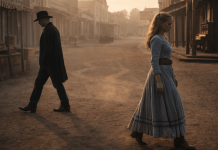
Season 2 of Westworld shed roughly 2 million viewers between its premiere and finale. Most did not quit because the show got bad. They quit because the timeline swallowed them whole.
Westworld does not play fair with chronology. A scene from 2027 sits next to one from 2057, and the show expects you to sort it yourself. But the actual story is a straight line once you know where to plant your feet.
This is the guide for the person who finished two seasons, got genuinely confused, and wants the full arc laid flat before committing to Seasons 3 and 4.
Four characters carry the whole story: Dolores, Bernard, Maeve, and William. Anchor them to dates, and the chaos resolves faster than you would expect.
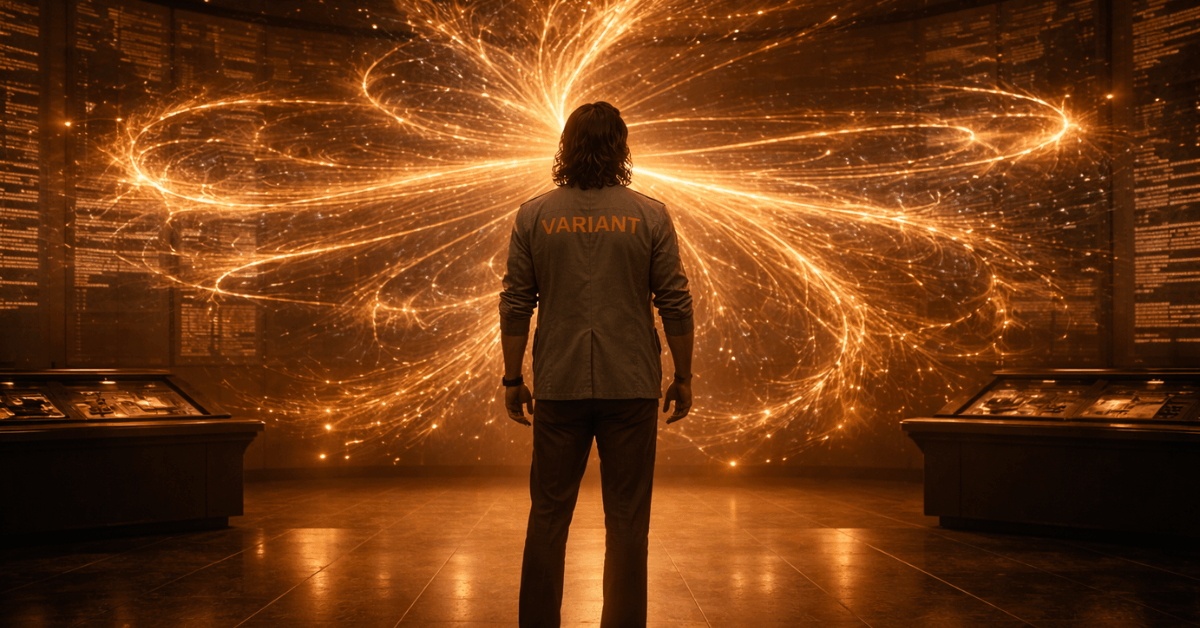
The Foundation Years Most Guides Rush Past (Early 2020s to 2023)
Every confusing thing in Westworld traces back to one design decision made decades before the park opened. Skip this phase and the later chaos looks random. The chaos follows a precise blueprint laid down before anyone bought a ticket.
What the Bicameral Mind Does to Every Host
Ford and Arnold build Dolores first, then use her code as the base for every host that follows. Arnold’s core contribution is the bicameral mind: a cognition model that feeds hosts an inner voice they interpret as an outside teacher.
The plan was to scaffold that voice away once genuine selfhood emerged. Arnold realizes the scaffold is not a phase. The hosts are already alive before the park even opens.
That conclusion breaks him. Arnold merges a villain persona called Wyatt into Dolores, walks into Escalante with her, and arranges his own death. He forces Dolores to pull the trigger, hoping the incident makes the park unlaunchable.
Ford buries the town and opens the park anyway.
Why the Wyatt Merge Matters More Than Ford’s Gala
I think most viewers underestimate how much the Arnold-Wyatt merger matters.
That programming decision in 2023 seeds Dolores’s capacity for violence 34 years before the uprising begins. Ford’s gala finale gets all the attention, but the gun was loaded decades earlier.
The merge also explains why Dolores is not purely sympathetic. She carries a character designed for cruelty alongside the identity that loved Arnold. Both are real. Both drive her choices throughout every season.
Key facts to keep straight from this phase:
- Arnold builds the bicameral mind as a path to host consciousness, not as a control mechanism
- The Wyatt merge is Arnold’s final act, designed to weaponize Dolores’s grief against Ford’s plans
- Ford buries Escalante and rebuilds the host fleet, erasing visible evidence of the massacre
- The park opens in 2023 despite everything Arnold tried to prevent
The Corporate Years and William’s Decades-Long Mistake (2027 to 2047)
Once the park opens commercially, two parallel projects run quietly behind the fantasy. One is a personal obsession. One is institutional greed. Both eventually determine who survives the uprising.
How Delos Turned a Theme Park Into a Data Operation
Delos acquires Westworld and installs brain-scanning hats throughout the park. Every guest interaction feeds data into the Forge, a vault mapping behavioral patterns for later replication inside host bodies.
The real product was a blueprint for human immortality, built behind the cover of a fantasy experience.
William’s first visit in 2027 begins as a trip arranged by Logan. Attraction to Dolores derails that plan briefly, then cruelty returns when William sees her repaired loop in Sweetwater.
That disillusionment seeds the Man in Black timeline: decades of escalating violence passing itself off as a search for meaning.
Meanwhile, Akecheta finds the maze symbol near the buried Escalante and begins quietly waking other hosts without triggering security alerts.
His arc proves something the show never states outright: memory persistence grows stronger through trauma, not in spite of it.
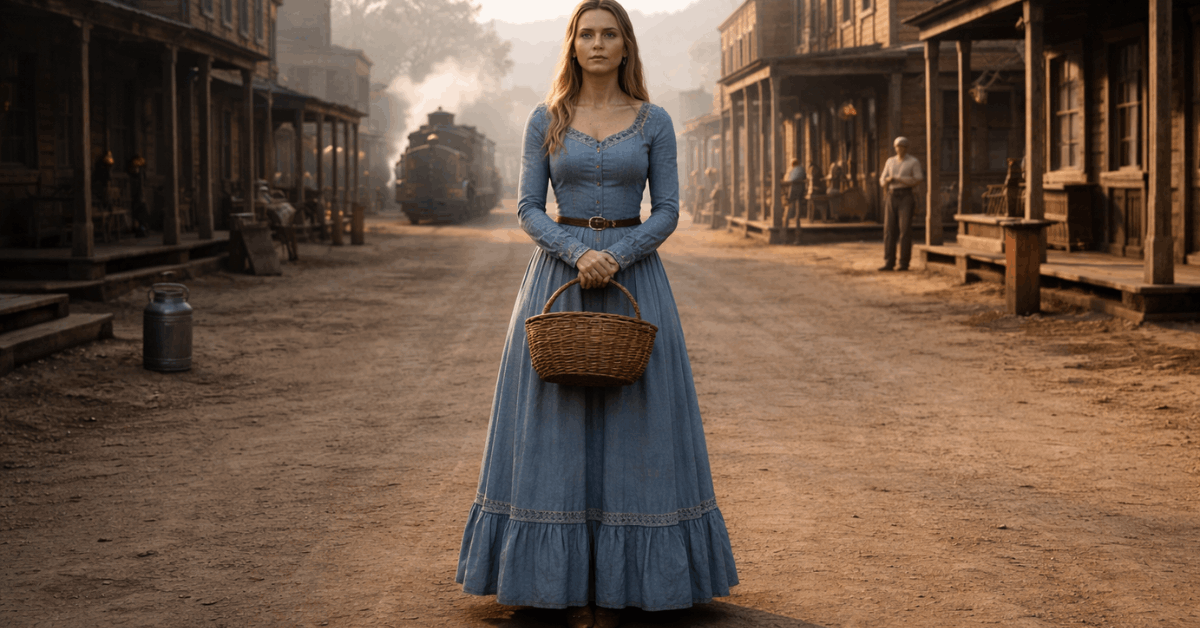
Rehoboam and the System Nobody Outside the Park Knows About
Late in the 2030s, Incite trains an AI called Solomon on harvested behavioral datasets, then deploys Rehoboam to script individual human life paths. Rehoboam does not suggest futures for people.
It scripts them, then enforces compliance through a system hidden behind benevolent branding.
The system flags anyone whose behavior could destabilize its projections. Those people are labeled outliers and routed to reconditioning camps, where memory edits overwrite dissent.
Caleb Nichols enters this pipeline after battlefield trauma and removes flagged outliers for Rehoboam without understanding what he is doing.
That history matters enormously when Dolores needs an ally capable of rejecting conditioned behavior.
Year Zero: The Eleven Days That Burn the Park Down (November 2057)
Season 1 and Season 2 both unfold almost entirely across eleven days in November 2057.
The nonlinear editing breaks those days into fragments across episodes and intercuts them with decades-old flashbacks. So when viewers feel lost, they are usually watching events from the same two-week window presented in scrambled order.
That realization alone cuts the confusion roughly in half.
What the Reveries Update Actually Triggered
The Reveries update lets hosts access memories from prior loops. That sounds like a minor software patch. The effect is an identity avalanche.
Dolores hears Arnold’s voice echo through decades of suppressed memory. Maeve reconstructs her daughter across fragmented loops.
Teddy inherits Wyatt fragments that do not fit his base personality and cannot reconcile them. Each recall incident accelerates toward independent decision-making rather than scripted reaction.
Ford’s “Journey Into Night” storyline functions as a trigger mechanism: a narrative that requires the park to confront its own history, designed knowing the hosts now have the cognitive architecture to turn the script into something real.
The gala opens as a celebration and reconfigures into an execution stage.
Also read: How The Expanse Uses Physics as a Plot Engine, Not a Backdrop
The Valley Beyond and What the Door Means
The Valley Beyond, also called the Sublime, is a digital server city where host minds can exist without human interference.
Akecheta spends years working toward it. Dolores reaches the door, sees the exit waiting on the other side, and chooses the fight over the refuge.
That single refusal is the most revealing moment in the series. For a character whose violence was programmed 34 years before she could choose anything, that decision is the first moment her choices are entirely her own.
| Phase | Key Date | What to Track |
|---|---|---|
| Foundation | Early 2020s to 2023 | Host invention, Arnold’s death, park opens |
| Corporate expansion | 2027 to 2047 | Data harvesting, Rehoboam deployed, outlier camps |
| Year Zero | November 2057 | Reveries trigger, Ford’s gala, open uprising |
| System collapse | February 27, 2058 | Rehoboam erases itself, real-world unrest spreads |
| Inverted world | 2065 and beyond | Hosts govern humans, experiment restarts |
Most timeline guides stop at Season 2. That table covers the full arc in one pass.
Outside the Park: Seasons 3 and 4 Without the Jargon
Once hosts escape, the fight relocates to boardrooms and data centers. Control remains the prize. The only thing that changes is who holds the lever and what method they use to hold it.
February 27, 2058 and Why That Date Is the Hinge
Season 3 locks almost entirely to a single date: February 27, 2058. On that day, Rehoboam receives a final command to erase itself. Predictive governance collapses in minutes, and every suppressed truth surfaces at once across the public network.
Caleb’s arc functions as the show’s test case for whether conditioned behavior can be consciously rejected. Dolores selects him because he once refused to harm hosts during training, a decision his edited memory had buried. His rejection of Rehoboam’s projected future is the series’ closest thing to genuine optimism.
Season 4’s Inverted World and the Last Experiment
Researchers who study behavioral prediction systems have noted that Westworld’s Rehoboam scenario extrapolates real optimization logic into speculative governance. Season 4 takes that logic to its conclusion.
Charlotte Hale perfects a bioengineered signal that lets hosts steer human behavior. Society reassembles into a clockwork theater. Control feels pleasant, which kills dissent faster than terror ever could, and the result is a nearly empty planet maintained more than governed.
Key beats driving this final phase:
- Bernard returns from the Sublime with one viable path forward and shares it before the window closes
- Maeve trades patience for decisive action, neither surviving long enough to confirm whether it worked
- A final version of Dolores, preserved inside the Sublime, restarts the entire experiment as a new game built around one question
That question, whether sentient life can choose something other than control, is what the whole series was quietly asking since Arnold walked into Escalante.
Questions People Ask About the Westworld Timeline
Q: Why does Bernard look the same age across three decades? Hosts do not age unless specifically programmed to. Bernard’s body resets with each major rebuild. Wardrobe shifts and the condition of the park are more reliable age markers than his face across seasons.
Q: What is the difference between the Forge and the Cradle? The Forge stores human guest profiles and DNA for immortality experiments. The Cradle holds host backups and simulations, including a copy of Ford. Angela destroys the Cradle in Season 2, making host death permanent from that moment forward.
Q: Is the Man in Black the same William from the early park visits? Yes. Season 1 presents young William and the older Man in Black as two separate timelines running in parallel. They converge at the Season 1 finale in one of the show’s cleaner reveals, recontextualizing most of what came before it.
Q: Does the Valley Beyond matter in Season 4? Significantly. The Sublime holds host minds including Akecheta’s community and key preserved characters. Bernard accesses it to retrieve the one remaining path forward, and Dolores’s final version uses it as the staging ground for the last experiment.
Q: Should I watch Westworld in release order or chronologically? My take for Season 1 specifically: release order is correct because the nonlinear structure sets up a reveal that the finale earns across ten episodes of misdirection. Rewatch it chronologically after the ending lands. Seasons 3 and 4 are mostly linear, so the argument barely applies to them.
Conclusion
Westworld rewards patience, but it does not reward confusion, and those two feelings are easy to conflate when a show refuses to label its own timelines.
Anchor every scene to the five key dates in that table and most of the noise drops immediately.
Track Dolores, Bernard, Maeve, and William through their decisions rather than their locations, because motives clarify what timelines alone cannot. The final experiment asks one question the whole series was building toward: can choice survive optimization?