In the Loki Series, an alternate 2012 Loki escapes with the Tesseract during the Avengers’ time heist and collides with the Time Variance Authority, an agency operating outside time and space.
That setup places Loki after the heist events of Avengers: Endgame while following a Loki who has not lived through later films. As you track his path, TVA rules, variant identity, and the Sacred Timeline meaning define how the show anchors the Multiverse Saga.
Loki Series at a Glance In The MCU
Context matters because the launch order and premise shape expectations. Marvel Studios rolled out WandaVision, The Falcon and the Winter Soldier, and then Loki on Disney+, and the series immediately tackled timeline logic rather than street-level fallout.
After Endgame introduced branch creation through time travel, Loki moved the concept forward by centralizing the TVA, Miss Minutes, and a multiversal backstory culminating in He Who Remains explanation in the season 1 finale.
As a viewer, you follow a villain-era Loki who meets a bureaucracy that claims to “manage” time for stability.
Where Loki Fits In The MCU Timeline
Loki’s escape occurs during the 2012 New York sequence revisited in Endgame. That action creates a branch where this Loki never experiences Dark World, Ragnarok, or his 2018 death.
TVA agents collect him and process him at headquarters, which sits outside conventional time, so subsequent episodes move through multiple eras without contradicting the mainline chronology.
Expect references to 2012 attitudes because this Loki remains early in his arc while learning more about himself, Sylvie, and the TVA’s motives. Practical takeaway for Loki timeline placement: events begin in an Endgame-created branch, then proceed in a setting unbound by the usual MCU calendar.
Sacred Timeline and Multiverse Mechanics
Season 1 describes a past multiversal war among variants of the same foundational scientist, later known as He Who Remains. According to his account and Miss Minutes’ briefing film, countless realities existed simultaneously, and conflict broke out as variants interfered across universes.
He Who Remains weaponized Alioth, isolated a controlled collection of realities, and synchronized their histories into a single approved flow labeled the Sacred Timeline.
As you hear it stated, multiple distinct universes can still exist inside that managed flow, which clarifies the Sacred Timeline’s meaning as a curated path rather than a lone universe.
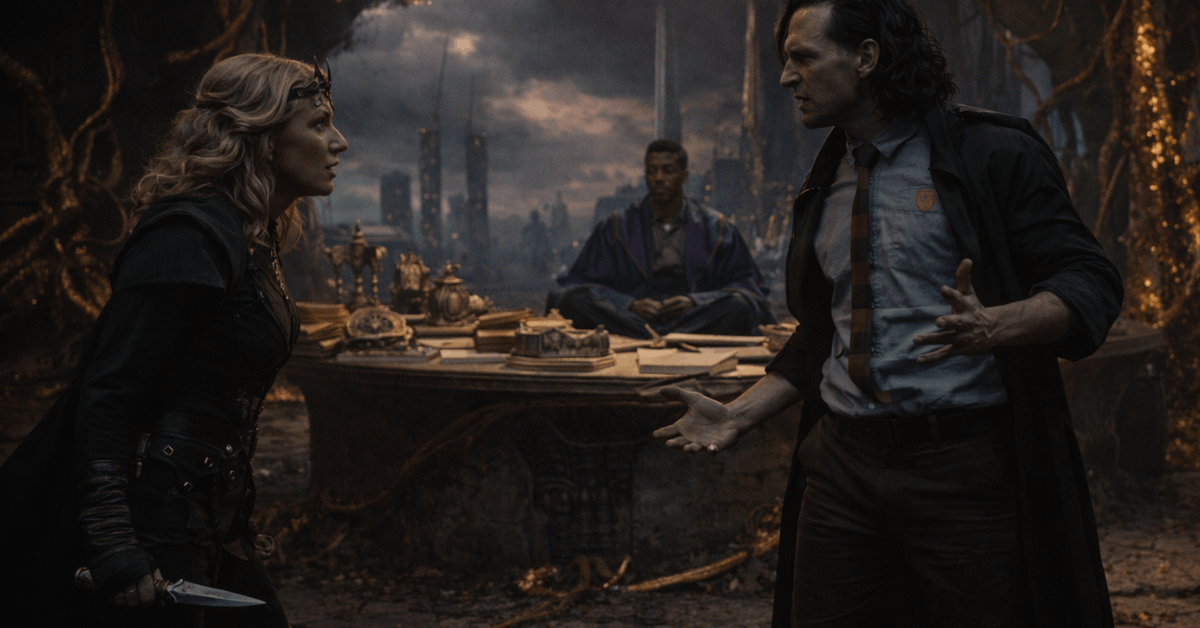
Sylvie kills He Who Remains
When Sylvie kills He Who Remains, she does not create a multiverse from nothing; she releases constraints that previously suppressed branching. Branches proliferate because the controlling hand disappears, not because realities begin existing for the first time.
That framework supports Variants in the MCU as unique beings from different universes who share a narrative role rather than DNA, which is why temporal aura scanning can flag a “Loki” independent of biology.
Season 2 keeps that logic and adds the concept of a Temporal Loom that strains under expanding branches.
TVA Rules and Variant Identity
The TVA presents itself as neutral timekeepers, yet the bureaucracy enforces He Who Remains’ plan. Pruning removes branches that deviate from the baseline path and minimizes conditions that would allow hostile variants to rise.
As you watch Loki, Sylvie, Classic Loki, Kid Loki, and Alligator Loki interact, the series emphasizes role, not lineage. Each variant has separate parents, histories, and bodies, but each fills the “Loki” slot inside a given world.
That premise explains how different Peter Parkers can coexist later in Spider-Man: No Way Home without sharing genetics while still representing the same identity archetype inside separate realities.
Season 1: What Changes For The Infinity Saga
Season 1 reframes prior films by revealing that a single actor behind the curtain shaped outcomes to prevent another multiversal war.
Endgame’s time heist still happens, the Avengers still win, and Thanos still loses, yet the series argues those outcomes remained inside parameters tolerated by the TVA. He Who Remains appears and offers a bargain that would keep the pruning active to maintain control.
Sylvie refuses and kills him, which lets branching accelerate and sets the stage for future crossovers. Practical implication: incursions, reality bleed, and variant collisions become structurally easier once the choke point disappears.
Season 2: Victor Timely, The Loom, and Loki’s Choice
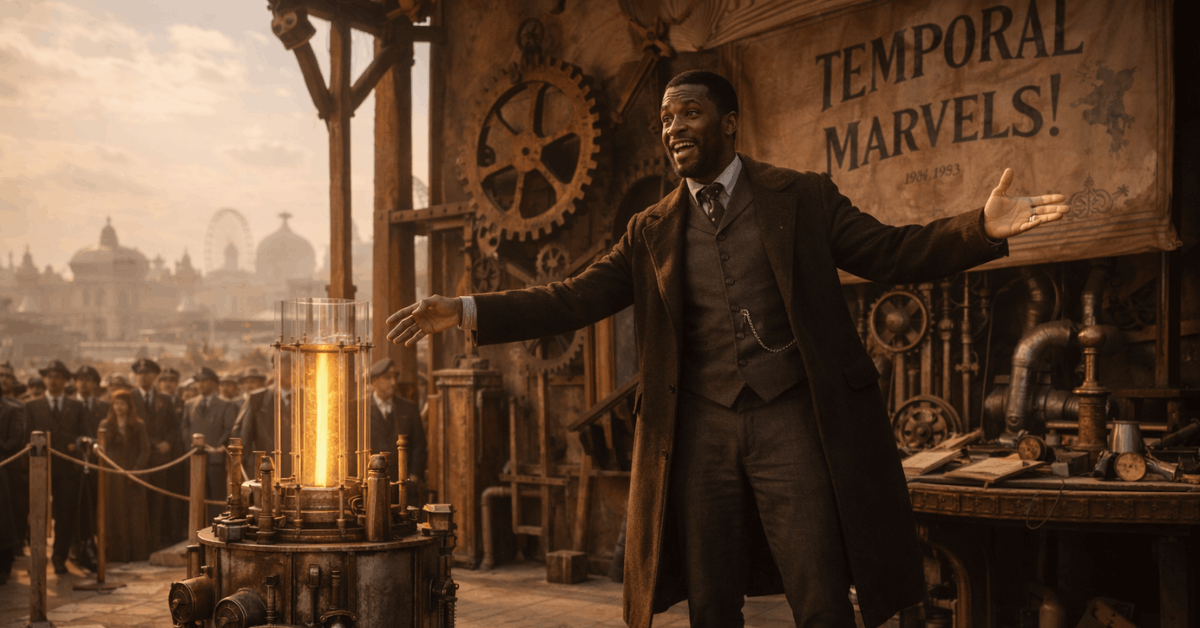
Season 2 introduces Victor Timely in Season 2, an earlier-century variant tied to the larger Kang family of identities. Timely’s knowledge and limitations complicate TVA’s attempts to stabilize the Loom, while Loki’s time-slipping forces him to iterate his strategy across many jumps.
The finale lands on a hard conclusion: the Loom cannot scale to infinite growth, so Loki accepts a different job. Rather than preserve a single synchronized flow, he sustains branching timelines so they remain alive and reachable.
That choice positions him as the living anchor of those timelines and removes the need for constant pruning. Stakes widen for the MCU multiverse saga because branches survive, the TVA must change its mission, and Kang variants continue to exist rather than vanish.
Connections To Other MCU Stories
In cross-project continuity, the series informs films and shows that depend on open branching and active variants. Read this section first to map where references matter most, then jump back to episodes for detail.
- Spider-Man: No Way Home relies on an unstable multiverse and variant visitors, a condition that aligns with He Who Remains’ absence and rising branch activity. Writers have linked the spell’s failure to that new environment.
- Doctor Strange in the Multiverse of Madness expands on incursions, which are universe-destroying collisions triggered by cross-reality interference, an obvious risk once pruning halts.
- Ant-Man and the Wasp: Quantumania foregrounds a Kang variant and introduces wider Kang coordination, which echoes He Who Remains’ warning about his counterparts.
Deadpool & Wolverine features direct TVA involvement, connecting Mobius-era policy changes and field operations to wider multiverse travel logistics.
What If…? continues to illustrate alternate outcomes consistent with a branched, unmanaged multiverse without TVA suppression.
Suggested Loki Viewing Order
A clean viewing path helps newer fans integrate the series without optional spin-offs. Use the compact table below to cover essential context while avoiding distractions. This Loki viewing order keeps focus on the multiverse backbone and the shows or films most directly affected.
| Step | Title Or Arc | Why It Matters |
| 1 | Avengers: Endgame (Time Heist Sequences) | Establishes branch creation and the Tesseract escape that launches Loki. |
| 2 | Loki Season 1 | Defines the TVA, introduces Sylvie, and ends the synchronized Sacred Timeline. |
| 3 | Spider-Man: No Way Home | Shows mainstream consequences of an unpoliced multiverse and variant arrivals. |
| 4 | Doctor Strange in the Multiverse of Madness | Explains incursions and escalating cross-universe risk after pruning stops. |
| 5 | Loki Season 2 | Resolves the Loom problem and sets Loki’s ongoing role sustaining many timelines. |
How Loki Uses Timeline Tricks Without Breaking Continuity
Prequels, postquels, and cross-cutting stories can create confusion if rules shift midstream. Loki avoids contradiction because TVA headquarters exists outside normal time, and the narrative follows a variant pulled off the board before later films.
Scenes spanning 1893, midcentury TVA offices, and apocalyptic futures remain consistent if you accept that the show hops between eras while the character’s personal development stays linear.
Expect Endgame references to anchor the starting point, followed by distinct historical settings driven by case-of-the-week missions and time-slipping. The series, therefore, complements period pieces like Black Widow and thousand-year epics like Eternals without requiring retcons.
Practical Rules For Following Multiverse Logic
Clarity improves when you track a few rules while watching. First, a “variant” is a person who fills a familiar narrative role inside a different universe, not a clone. Second, the TVA’s scanners detect temporal aura, which tags the role rather than a genome.
Third, branch growth accelerates when control ends, increasing the risk of incursions and villain ascents. Fourth, pruning reduces future conflict but erases free will, which drives Loki and Sylvie’s ethical divide.
After accepting those points, the broader network of cameos, post-credits scenes, and new villains reads as consistent escalation rather than contradiction.
What It Means For The Multiverse Saga
Loki finishes season 2 with the TVA reframing its mission and Loki sustaining a living network of timelines that remain accessible for travel and storytelling.
That position gives Marvel Studios a practical way to move characters across projects, retire arcs without erasing them, and reintroduce identities through variants where needed. As a viewer, you benefit because crossovers like the TVA in Deadpool & Wolverine feel earned rather than arbitrary.
Expect future arcs to reference Loki’s choice when justifying why certain universes remain stable and why others require intervention. The underlying policy shift at the TVA also invites oversight debates, since agents must balance noninterference against preventing catastrophic incursions.
Last Thoughts
In the end, Loki clarifies the Multiverse Saga rather than complicating it. A variant torn from 2012 confronts the TVA, exposes curated history, and frees branching timelines.
Sylvie’s choice ends control; season two makes Loki the living anchor that keeps timelines alive. The TVA pivots from pruning to stewardship, setting stakes for incursions, Kang variants, and future crossovers.
Treat that outcome as a stable baseline for watching new MCU stories slot into place.