The film Prey on Hulu reshapes the Predator franchise through a grounded, character-driven lens.
This Movie Explained With Clear Takeaways focuses on how Naru’s final battle and symbolism deliver meaning beyond survival.
The story takes place in 1719, where a young Comanche woman faces a brutal alien hunter. This article covers how the ending works, what it represents, and how it connects with the larger franchise.
Naru’s Strategy: Turning the Predator’s Tools Against It
Naru’s final plan is built from everything she learned throughout the film. She observes, adapts, and executes without hesitation.
The Mud Pit as a Setup, Not a Coincidence
Naru leads the Predator back to the mud pit she discovered earlier in the film. She sets the stage so that the Predator walks into a trap, mirroring earlier moments when she studied its habits.
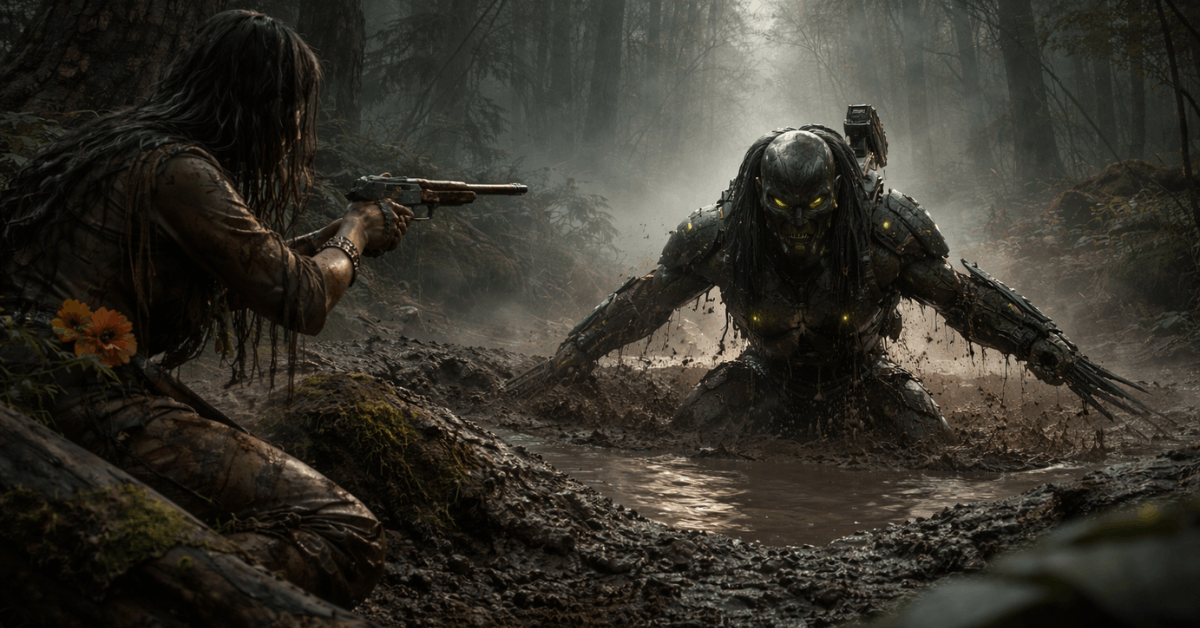
The trap isn’t luck—it’s part of her tactical plan. She hides her body heat using the orange Tutsia flower. The Predator can’t see her, which gives her the edge.
Understanding and Using Predator Tech
She uses the creature’s helmet and arrow guidance system to turn its own tech against it. Earlier in the film, she learns the helmet locks onto the target.
In the final moments, she places the helmet precisely where she needs it. When the Predator fires, the guided darts turn back on it. This ending isn’t just about killing—it’s about mastery and control.
What Each Animal Symbolizes in Naru’s Journey?
The movie includes symbolic fights with a lion, a bear, and a wolf. These are not just battles but learning experiences.
- The lion teaches her to observe and wait for the right moment.
- The bear forces her to rely on cover and stealth.
- The wolf shows her the importance of speed and precision.
Each encounter builds her instincts and mindset. These scenes are placed carefully before the final confrontation to show her progression. She doesn’t just face the Predator—she evolves into someone who can defeat it.
Symbolism in the Flower, the Pistol, and the Predator Code
The film layers subtle messages into objects and behaviors. These symbols deepen the meaning of the story.
The Orange Flower as a Symbol of Awareness
The Tutsia flower lowers body heat and blocks thermal vision. Beyond its function, it represents her deep knowledge of nature.
It’s not brute force that wins—it’s understanding. Naru’s strategy is rooted in culture and observation. The flower becomes a visual sign of her transformation from learner to hunter.
The Flintlock Pistol: A Nod to Legacy and Power Transfer
At the end, Naru receives a flintlock pistol marked with “Raphael Adolini 1715.” This pistol appears again in Predator 2, linking timelines.
It symbolizes recognition—she is now a respected warrior. It also shows how knowledge and tools are passed on. The object bridges the prequel with the rest of the franchise.
Gender Dynamics in a Violent Franchise
This film intentionally changes who leads and how strength is shown. Naru’s growth directly opposes past Predator tropes.
Brains Over Brute Force
Unlike other films where men rely on physical power, Naru relies on calculation. Her strength is not just shown in battle but in restraint and patience.
Her character arc is about becoming effective through intelligence. This shift modernizes the franchise. It opens new doors for future stories.
The Brother’s Role as Catalyst
Her brother Taabe recognizes her abilities even before others do. He sacrifices himself to buy her time.
His death isn’t just emotional—it’s meaningful. He passes the torch to her without jealousy. The film respects both roles without conflict.
Comanche Worldbuilding and Historical Accuracy
The setting in 1719 plays a major role in the story’s impact. Everything from costumes to language feels grounded.
French Trappers and Their Contrasts
The French colonists show a careless attitude toward nature and indigenous people. They kill animals wastefully and capture Naru for sport.
This contrasts with the Predator, who follows a strict hunter code. The film uses this contrast to critique real historical violence. It shows that brutality without honor has no place in true survival.
Language, Tools, and Camp Life
The Comanche use realistic tools, weapons, and hunting methods. Their village scenes are calm and respectful.
Even the original language is available in the Comanche dub. This attention to detail makes the world feel real. It adds weight to the story’s emotional beats.
Layered Message Under the Action
While the movie has intense scenes, the emotional and symbolic layers are just as important.
- The mud pit becomes more than a trap—it’s a rebirth.
- The flintlock pistol connects timelines and power structures.
- The invisibility flower marks a shift from hunted to hunter.
These elements are all planted early and resolved clearly. Nothing feels random. The story moves with intention and payoff.
What the Ending Means for the Predator Franchise?
This ending changes what future Predator stories can be. It expands the universe without relying on military tropes.
Honor, Not Just Power
The Predator refuses to kill anyone it doesn’t view as a threat. This is consistent across the franchise. It builds a moral code into a violent character.
When Naru becomes a threat, the Predator acknowledges her. This elevates the final kill to something earned, not given.
A New Starting Point
The credits show more ships arriving. This hints that the story may continue. But even if it doesn’t, Prey works as a complete origin.
It shows a different angle of the same universe. That fresh angle is why the film stood out.
Predator’s Perspective: A Code-Driven Killer
The Predator is not just a monster—it follows a structured moral code. Understanding its behavior adds depth to the ending.
Rules of Engagement
The Predator only attacks those it deems a valid threat. It skips children, unarmed individuals, and animals it doesn’t consider worthy.
This aligns with the franchise tradition dating back to the 1987 original. Its violence is selective and ritualistic, not random. This makes Naru’s win more powerful—she is recognized as a real warrior.
Technology vs Instinct
The Predator uses advanced tools like cloaking, thermal vision, and auto-targeting. But despite this edge, it still relies on instinct and physical combat.

Its decisions come from experience and judgment, not just machines. This mirrors how Naru also combines tradition with tactics. The fight becomes a clash of two hunters, not two species.
The Ending You Didn’t See Coming
Prey does more than deliver a suspenseful hunt—it builds a layered, culturally rich experience. This Movie Explained With Clear Takeaways confirms that each scene in Naru’s journey matters, from the flower to the final shot.
You watch her evolve, adapt, and dominate using strategy over strength. The result is a modern franchise entry that rewards close attention.