Naru does not beat the Predator by being stronger. She beats it by being smarter than everyone around her, including the alien that has been hunting longer than her tribe has existed.
Most people walk away from Prey impressed but unsure why it clicked so cleanly. The ending feels earned, the setup feels deliberate. Tracing exactly how Naru pulled it off reveals how carefully the film was constructed.
This breakdown covers how each animal encounter built a real, transferable skill, how she dismantled the Predator’s two biggest technological advantages, and what the film’s recurring objects are quietly arguing throughout.
One detail upfront: the Predator’s own code of honor is what made Naru’s victory structurally possible. That changes how the whole film reads.
The Animal Encounters Were a Curriculum, Not Decoration
Every creature Naru faces before the Predator teaches her something specific. Most films use animal encounters as mood-setting, a way to establish atmosphere or danger. Prey uses them as load-bearing instruction.
The sequence is intentional design. She encounters the lion, the bear, and the wolf in a specific order, learning patience, then stealth and positioning, then speed and accuracy.
She does not collect these skills at random. She learns them in the order she will need them.
| Animal | Skill Taught | How It Appears in the Final Fight |
|---|---|---|
| Lion | Patience and reading the threat | Identifies the mud pit early, waits for the exact right moment |
| Bear | Stealth and positional control | Selects the mud pit for its spatial advantage over the Predator |
| Wolf | Speed and accuracy | Executes the helmet trap with precise, committed timing |
Each lesson compounds the one before it. The final confrontation does not ask Naru to improvise. It asks her to apply.
What the Lion Teaches Her About Patience
The lion encounter is about one thing: patience. Not courage. Not strength. Watching, reading, and waiting before acting.
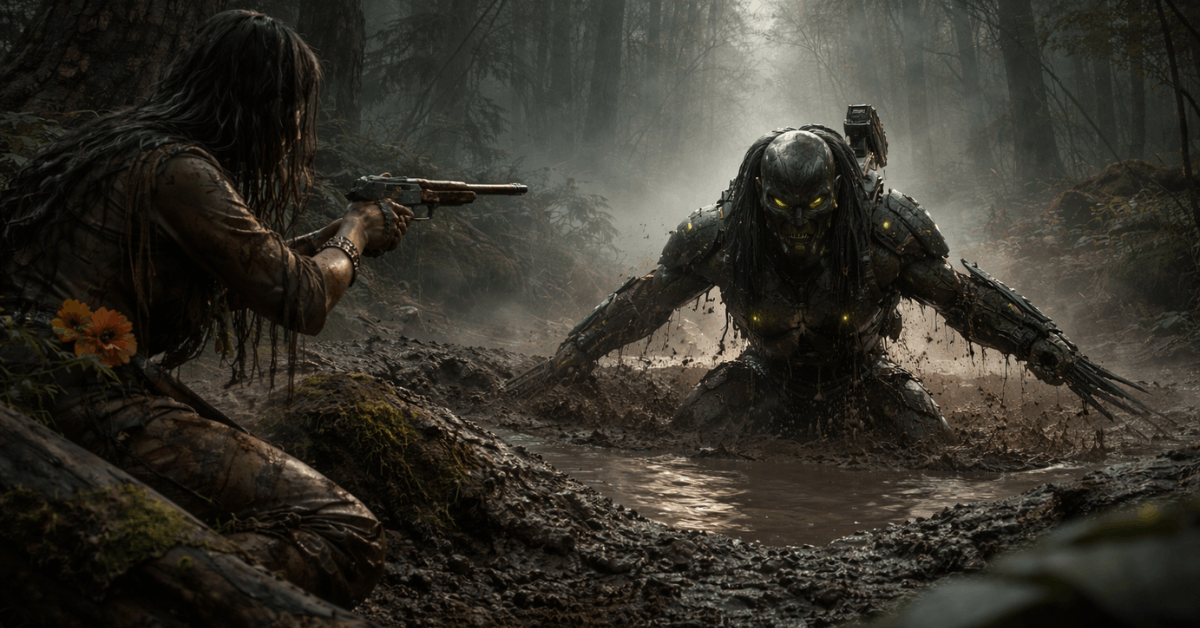
Naru observes the animal before she moves. She reads the threat before committing. That discipline reappears at the film’s climax, when she identifies the mud pit long before she needs it and holds that knowledge until the conditions belong to her.
I think most viewers read the lion scene as a near-miss survival moment. What it actually is: the film installing her core operating principle before the Predator ever appears on screen. Assess the threat. Wait. Act when the moment is yours.
That principle runs through every major decision she makes in the second half.
Also read: The Green Knight: What the Movie Leaves Open to Interpretation
Why the Bear Scene Is the Most Underrated Setup in the Film
The bear encounter teaches stealth and positional awareness simultaneously. Naru does not outrun it through speed alone. She thinks about where she is in relation to where the threat is. She uses space deliberately.
That spatial thinking becomes the blueprint for her final trap. The mud pit is not just a hiding spot. She selected that location specifically for the positional advantage it gives her over a larger, more powerful opponent.
Add the wolf, which sharpens speed and precision, and when Naru faces the Predator, she has completed a three-part training sequence the film never announces as one. That is intentional architecture disguised as atmosphere.
How Naru Dismantled the Predator’s Two Biggest Advantages
The Predator carries two tools that make fighting it directly almost impossible: thermal targeting and guided weaponry. Naru neutralizes both. She does it through preparation that begins before most viewers realize a plan is forming.
The Thermal Masking Was Not an Accident
The Tutsia flower is introduced early as something Naru understands. The knowledge sits in the background, patient, waiting for its moment. The film does not telegraph its importance. It simply exists in her understanding of the natural world.
Using the flower alongside mud to suppress her body heat, she removes the Predator’s primary targeting method.
She does not overpower the technology. She sidesteps it entirely through biology, which is a more elegant solution than any firearm the French trappers carry.
The Predator’s thermal vision made it terrifying against the trappers. Against someone who studied plants, that same vision becomes useless. A technological advantage collapses against a naturalist who paid attention.
How She Turned the Guided Dart System Against Its Owner
The guided dart system is the film’s most frightening weapon. Once a target is marked, the dart finds them. There is no running from it. The trappers learn this the hard way.
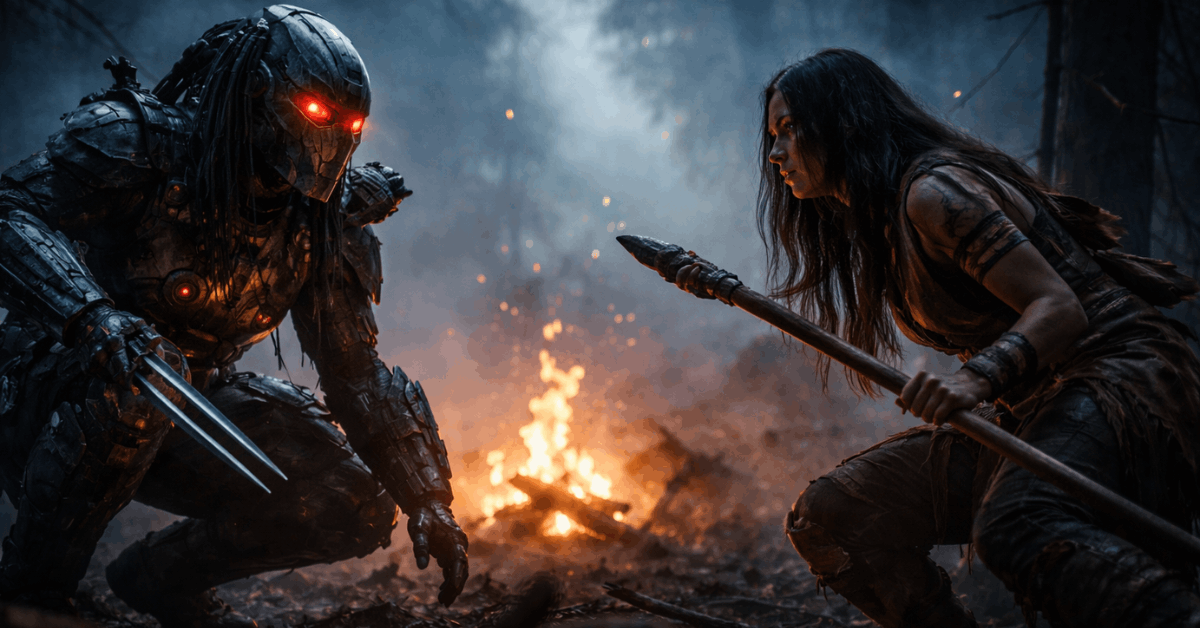
Naru watches how the system operates before she engages directly. She observes what gets marked, how the dart tracks, and what the helmet controls. Then she positions the helmet so the Predator itself becomes the marked target.
The final kill is a puzzle she solved by studying the components during every prior encounter. Observation and timing close the film, not firepower. For a franchise that built its reputation on spectacle, that is a genuinely unusual choice. It is also the right one.
The Predator’s Code Made Her Victory Structurally Inevitable
Most breakdowns of Prey treat the creature’s hunting code as backstory or franchise lore you either know or look up afterward. I disagree with that framing specifically, because in Prey the code is not backstory. It is the actual plot mechanism driving the ending.
The Predator selects targets by demonstrated worth. It ranks, watches, and reassesses rather than attacking everything it encounters. Its selection criteria work like this:
- Demonstrated capability: the target must show real skill, not just survival instinct or dumb luck
- Worthy opposition: the creature engages those who can genuinely threaten it, passing over targets that cannot
- Selective restraint: it withholds full engagement until the opponent has earned it
That framework explains every encounter in the film. And it makes Naru’s trap possible.
Why the Predator Kept Letting Naru Live
The Predator passes over the deer. It kills the bear. It fully engages the armed French trappers. It keeps recalibrating Naru as she moves from observer to participant to legitimate threat.
Each time she survives an early encounter, it is not because the creature failed. It is because she demonstrated enough to move up its internal ranking. That escalating recognition is not incidental to the story. It is the story.
When she springs the trap at the mud pit, the Predator is fully engaged, standing its ground, expecting a real fight. That is precisely what she needs. A dismissive opponent does not hold a position long enough for the helmet trap to close.
Her win depends on being taken seriously before she can be lethal. The Predator’s own code becomes the mechanism of its defeat. That is elegant filmmaking.
What the Objects in the Film Are Quietly Arguing
Prey does not announce its symbolism. The objects carry meaning without commentary, expecting viewers to do the work.
The key items doing the heaviest lifting:
- The orange flower: represents knowledge of the natural world as a form of power. Naru uses a plant to defeat a technologically advanced alien hunter. That image lands because the film spent time establishing her botanical knowledge long before it becomes relevant as a weapon.
- The flintlock pistol: signals a transfer of status. The pistol previously belonged to someone the Predator judged worthy. Naru holds it at the end. No dialogue required to make the point.
- Taabe’s sacrifice: removes the one figure who could share or dilute Naru’s responsibility. She carries the final decision alone, which forces her arc to complete without a safety net.
These are not decorative details. They are the film’s closing argument about what kind of power Naru now holds and what she inherited by earning it.
Why Prey Feels Fresh by Going Back to the Original Idea
Most reviews frame Prey as a great Predator film because it breaks from the formula. I think the opposite reading is closer to the truth.
Prey works because it is more faithful to the original Predator logic than any entry in the franchise since 1987.
The original film succeeded because the Predator was hunting soldiers who could genuinely fight back, and the creature’s code of selectivity drove every scene.
Each sequel layered on mythology and spectacle, and each one moved further from the mechanism that made the first film feel tense.
Prey strips it back. The creature’s code of honor is not lore the audience imports from franchise knowledge.
It is plot mechanics built into the film itself. And that return to the original engine is exactly what makes Prey feel more original than films that tried harder to reinvent everything from scratch.
The Comanche historical context gives the story a grounded specificity the sequels never bothered to find.
The contrast between the Comanche lifestyle and the careless violence of the French trappers mirrors the Predator’s own code almost exactly: one group hunts with precision and respect for the opponent, the other kills without discipline.
Naru belongs to the first group. That alignment is not subtle, and it is not accidental.
Questions People Ask About Prey
Q: Why does Naru use mud to hide from the Predator? The Predator’s targeting system tracks body heat. The Tutsia flower combined with mud suppresses her thermal signature effectively enough to remove her from the creature’s targeting. She applies this after observing the vision system in action, not as a guess. The flower’s properties were established in her knowledge base long before the confrontation arrives.
Q: Why does Taabe die rather than survive with Naru? Taabe’s death is a structural decision, not a dramatic shock. His survival would split the film’s resolution between two characters, softening Naru’s arc and creating ambiguity about who carries authority forward. His sacrifice confirms her capability without requiring a handover scene that would slow the ending considerably.
Q: Does the Predator let Naru live on purpose during their early encounters? Almost certainly yes. The creature’s code involves ranking opponents by demonstrated skill, and Naru repeatedly shows enough capability to move up that internal ranking. It is not failing to eliminate her. It is watching her qualify as a worthy opponent before fully committing to the hunt.
Q: What does the flintlock pistol mean at the end of the film? The pistol connects Prey to the wider timeline while functioning primarily as a status marker. Naru holds what a previously recognized worthy opponent once carried. It signals she has entered a specific lineage of fighters the Predator has acknowledged across centuries of hunting, without a word of explanation needed.
Q: Does the ending set up a sequel? The ending leaves room without requiring one. Naru’s arc closes fully and cleanly. Any sequel would need to build its own case from scratch, because this story does not leave unresolved threads designed to pull viewers into another film.
Conclusion
Naru’s win rewards viewers who tracked every animal encounter before the final confrontation with the Predator arrived. The film hides its instruction manual inside what looks like incidental atmosphere and background scene-setting.
Revisiting the bear scene or the lion encounter after seeing the ending makes both moments feel twice as purposeful and calculated. The best action films always get sharper the more you understand about how they were actually built.