Severance looks like a workplace mystery, but its sharpest question is about who owns a person when a company divides their mind. This guide examines the Severance themes of corporate control, identity, consent, grief, and labor without treating every prop as a puzzle.
Lumon’s offices are frightening because they make confinement look tidy, calm, and rewarding.
The innies are not workplace versions of their outies; they are people who live every working minute their outies choose to forget. It is especially useful for viewers revisiting the series after learning how carefully Lumon stages obedience.
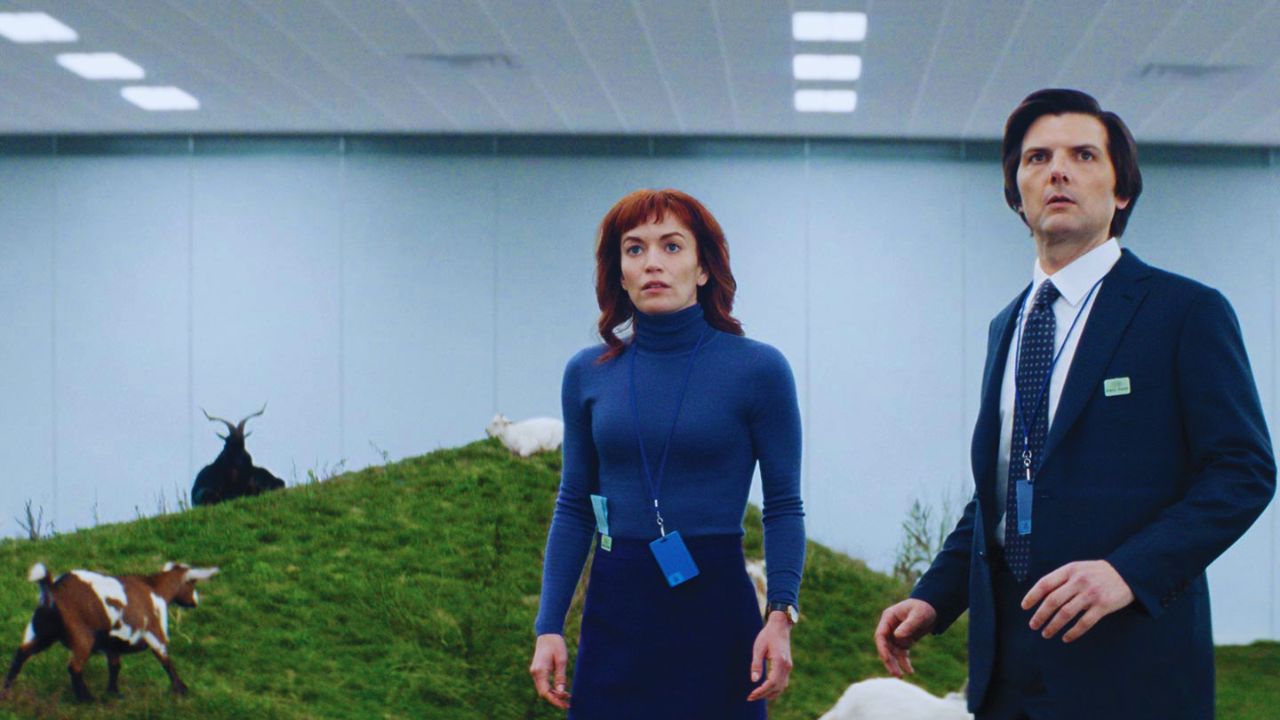
Lumon Builds a Private Reality for Its Employees
Lumon controls what the innies can know, where they can walk, how they speak about the outside world, and which feelings may surface. White corridors, cubicles, cheerful posters, and tiny rewards make obedience feel safer than curiosity.

Finger traps, waffles, praise, and privileges are offered beside suspicion and punishment. Its rituals turn workplace management into a system that remakes reality from within.
Polite Language Makes Coercion Easy to Miss
Managers rarely need to shout because Lumon gives them a vocabulary that makes cruelty sound professional. Wellness sessions use gentle voices, performance reviews sound supportive, and break-room punishment is called correction.
Helly’s refusal exposes the logic beneath that tone. When an employee resists, the language of care becomes a cover for coercion.
The Innie-Outie Split Creates Two Unequal Lives
The procedure separates memory, but it does not erase personality, fear, or moral judgment. An innie wakes without family or home, yet forms friendships, dreads punishment, and wants a future beyond fluorescent lights.
The outie receives the benefit of leaving, while the innie experiences every hour of labor. One self receives relief, and another carries the cost.
Helly Refuses to Let a Contract Define Her Humanity
Helly’s outie treats the severed version of herself as a useful tool, but her innie reacts like someone trapped against her will.
She tests the exits, harms herself, and insists that suffering cannot be dismissed because another version signed papers. Her struggle makes the abstract issue of identity concrete.
The show measures personhood through lived experience, not Lumon’s definition of employment.
Mark Shows Why Severance Can Feel Tempting
Outie Mark chooses severance after Gemma’s death because ordinary life has become unbearable. The procedure gives him a break from grief, which is why it is not an obviously foolish choice.
Yet the relief creates an innie who works every day without understanding why he exists. Mark’s story makes avoidance a bargain: one part escapes pain, while another is denied the context needed to understand it.
Grief Does Not Stay on One Side of the Elevator
Innie Mark appears steadier at first, but Petey, Helly, and Ms. Casey draw out absence, trust, fear, and attachment. He cannot remember Gemma, yet he responds to loss with a force suggesting grief is more than memory.
Lumon can split information, but it cannot fully manage emotion. That failure makes the company’s promise of a clean divide feel less believable.
Work-Life Balance Becomes a Horror Story
Severance exaggerates a familiar promise: leave work at work and return home untouched by it. An outie experiences an elevator ride and receives an empty evening; an innie never experiences rest, age, or a private horizon.
Every moment of awareness belongs to the employer. The series turns work-life balance into a warning about labor, asking who absorbs the burden when convenience is divided unequally.
Petey Reveals the Cost of Putting a Person Back Together
Petey’s reintegration shows that even escape may bring damage. His pain, confusion, and mixed memories reveal that the split was never harmless, even before Lumon’s rules are fully visible.
He is evidence that the company’s solution has costs it will not discuss. Through Petey, the story links recovery with risk.
Symbols Turn Lumon’s Design Into an Argument
Blank corridors deny orientation, elevators erase continuity, and the Perpetuity Wing treats Kier Eagan’s image like sacred authority. Even rewards feel childlike, reducing adults to predictable cycles of approval and disappointment.
Corporate power depends on ritual as much as policy, and on myth as much as surveillance. The office design makes that argument before the dialogue does.
Also Read: Succession Character Motivations Explained
The Black Hallway and Baby Goats Suggest a Larger Experiment
Irving’s black hallway, the goats, the paintings, and unknown departments do not need one final answer to matter.
They make the severed floor feel incomplete, as though workers have seen only one part of a larger operation.
On a rewatch, they work best as signs of scale, not proof of a single theory. They deepen secrecy and experimentation, reminding viewers that Lumon’s map exceeds employee knowledge.
Consent Is Not Solved by the Outie’s Signature
An outie may choose surgery, sign documents, and accept the benefits, but the innie wakes inside a contract they never read and cannot reject.
Helly’s story is disturbing because the company calls the arrangement voluntary while the person suffering inside calls it captivity.
Lumon turns consent into a legal shield against responsibility. The series asks whether a person can agree for someone else sharing their body but not their life.
The Finale Lets the Innies Speak Where They Are Usually Silent
When the innies briefly wake outside Lumon, they receive context. Helly speaks against the procedure, Irving follows evidence, and Mark discovers a truth that changes his understanding of Ms. Casey.
Freedom arrives in minutes rather than years. The sequence turns outside knowledge into resistance, showing that control weakens when people compare official stories with hidden facts.
Three Questions Keep a Rewatch Grounded
A useful rewatch follows repeated patterns instead of assuming every object contains a secret code.
Notice what Lumon calls kindness, what it withholds, and who can make choices for someone else. These questions keep the focus on evidence and power.
Pause when a detail returns, then ask whether it changes a character’s decision or simply makes the office feel stranger. Track recurring sounds before explanations:
- Who benefits when an innie cannot refuse?
- Which rituals turn fear into obedience?
- What knowledge becomes dangerous when it is shared?
Conclusion: The Horror Is That Lumon Makes Harm Look Normal
Severance is most unsettling when it presents control as a workplace benefit rather than an obvious threat. The innies are people made vulnerable by a system built to keep their experience invisible.
On a rewatch, notice the reward before the demand, the calm voice before punishment, and the rule that stops one self from helping the other. The series argues that dignity requires choice, and no corporate promise can make missing freedom acceptable.