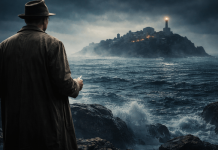
David Lowery’s The Green Knight is a visually rich and intellectually layered film from the 2020s. Its strength lies in what the movie leaves open to interpretation, challenging viewers to engage with symbolism and ambiguity.
The narrative avoids clarity in favor of mythic tone and open-ended storytelling. This article breaks down the key areas where the film resists direct explanation.
Gawain’s Journey: A Test of Character or a Dream?
Gawain’s adventure can be seen as either a literal test or a metaphor for inner growth. The story structure suggests both a hero’s trial and a waking dream.

The Line Between Myth and Reality
The film never confirms if Gawain’s encounters are real. From giants to talking foxes, everything feels like a fable or inner vision.
This framing allows the viewer to question his path as either a personal hallucination or a divine challenge. The lack of explanation enhances the film’s dreamlike tone.
Gawain’s Intentions and Growth
Gawain begins as a man who desires fame, not honor. His quest forces him to face consequences, including shame and cowardice.
The shift from pride to surrender is subtle but meaningful. It’s unclear if he learns a lesson or escapes through fantasy.
The Ending as a Loop
In the final scene, Gawain removes the sash and awaits his fate. The Green Knight commends him, leaving his future unstated.
Is it death, mercy, or rebirth? The cyclical storytelling leaves that decision to you.
Symbols That Blur Meaning
Symbolism drives the film more than dialogue. Many images carry layered interpretations that resist simple analysis.
The Green Sash and Its Power
The green sash promises to protect Gawain from harm. Yet it represents more than magic—it reflects fear and dishonor.
His dependence on it challenges his courage. Its removal is both a confession and an act of freedom.
The Fox Companion
The fox travels with Gawain as both guide and critic. It speaks only once, warning him to turn back.
Whether real or symbolic, it mirrors his inner doubts. Like conscience, it disappears once ignored.
Color and Nature
Green dominates the film as a symbol of life, decay, and inevitability. The forest becomes a place of transformation.
Nature watches silently, offering no judgment. Viewers must decide what the green stands for.
Meaning Hidden in Structure and Time
The film presents a nonlinear experience. This storytelling technique builds ambiguity and disorientation.
Fragmented Time and Fantasy Logic
Scenes appear without transitions, challenging normal time flow. Characters reappear or change roles without notice.
It creates a sense of mythic unreality. This lets the viewer question the truth of each event.
The Vision of the Future
Before removing the sash, Gawain imagines years of shame. He sees his future as king, father, and traitor.
But it’s unclear if this is prophecy or internal panic. The ending shows he can change that outcome, or die with dignity.
Interpretation Through Religious and Pagan Elements
The film blends Christian and pagan symbols without clear alignment. These tensions shape viewer interpretation.
The Green Knight as Death or Nature
He is both a challenger and a teacher. His calm tone and leafy design make him appear like a forest god.
Is he a divine judge or a test from nature? The film doesn’t answer directly.
Gawain’s Mother as a Spiritual Catalyst
His mother creates the challenge using magic. Is she helping him or punishing him?
Her silence and mystery are deliberate. She represents feminine power and fate in contrast to Gawain’s masculine fear.
Pagan Rituals and Holy Icons
Gawain carries a Christian token but walks through pagan lands. The mixing of faiths reveals a world with no spiritual certainty.
This duality supports the film’s central theme: no path guarantees truth.
Audience Participation in Meaning
The film invites you to think, not just watch. You must engage with uncertainty.
Emotional Distance Builds Reflection
Gawain shows little emotion throughout the film. That distance lets viewers reflect more than sympathize.
His silence encourages projection. You bring your own beliefs to his decisions.
Every Viewing Changes the Message
On a second watch, new details change your understanding. Patterns emerge in behavior and imagery.
The structure supports re-interpretation. Ambiguity becomes the film’s greatest strength.
Critics Disagree on Purpose
Some call it a failure of clarity; others see it as a triumph of myth. The divide proves how layered the story is.
Even professional reviews can’t settle its message. That resistance to closure makes the film enduring.

Comparison to Other Ambiguous Films
Some films share the same interpretive style. They don’t offer full clarity because that’s not the point.
The Witch – 2015
It leaves the question of reality versus hysteria open. Like The Green Knight, it uses silence and pacing to build meaning.
Symbols dominate over plot. Audiences become judges of truth.
Under the Skin – 2013
This film tells little through words, much through visuals. The alien nature of the main character invites interpretation.
You follow her journey without answers. Each act means something different to each viewer.
Men – 2022
Rich in symbolism, Men leaves gender, trauma, and guilt open for discussion. Like The Green Knight, it focuses on repeated imagery.
Its horror comes from ideas, not clarity. Both films use discomfort to provoke thought.
Two Perspectives in One Story
This section explores dual meanings in key scenes. Two brief intros guide each interpretation.
Sometimes scenes feel real. Other times, they seem imagined. These sections compare both possibilities.
Real Events with Symbolic Weight
Gawain meets the Lord and Lady in a mysterious castle. The events could be real but rich in subtext.
The Lady tests his purity with temptation. The Lord later returns the reward—his kiss—suggesting a moral lesson.
Psychological or Internal Experience
Gawain’s choices mirror fears more than facts. The Lady has the same face as Essel, suggesting projection.
The castle could be a mental trial. Each step represents fear, lust, and shame.
Your Interpretation Defines the Story
The film doesn’t define truth. It wants you to define it.
Viewers Fill in the Blanks
No narrator explains motives or rules. You decide if Gawain grows or fails. The story fits many frameworks. It rewards reflection, not analysis.
Meaning Grows with You
What feels like failure now may look like maturity later. Younger viewers may see shame; older viewers might see sacrifice.
Life experience changes the ending. That is the film’s power.
The Film Doesn’t Want to Resolve Itself
Ambiguity is not a flaw. It’s the design. The film trusts its audience. That makes it rare.
Final Thoughts: What You Take from It Matters Most?
David Lowery’s The Green Knight uses layered imagery, silence, and structure to ask more than it answers. At its heart is a deep exploration of identity, fear, and legacy.
The beauty lies in what the movie leaves open to interpretation, not what it explains. In the end, you walk away not with facts, but with questions that stay with you.