The Sopranos ending remains unsettling because it refuses the comfort of a normal finale. Tony waits for his family at Holsten’s, Meadow struggles to park, and the jukebox plays while every movement becomes suspicious.
The scene never confirms whether Tony dies or survives. Instead, it places viewers inside the fear and uncertainty that have shaped his life for years.
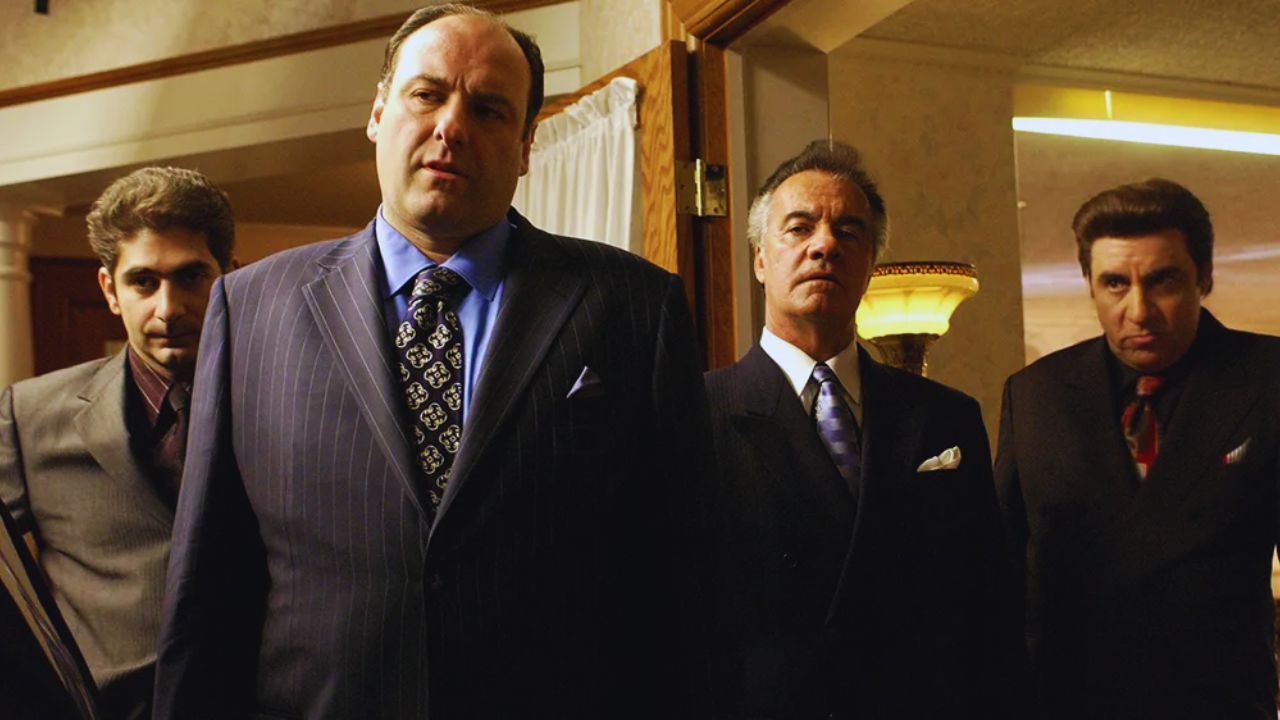
Holsten’s Turns an Ordinary Dinner Into a Threat
The diner is bright, busy, and completely familiar. Families eat, workers cross the room, and Tony orders onion rings while “Don’t Stop Believin’” plays.
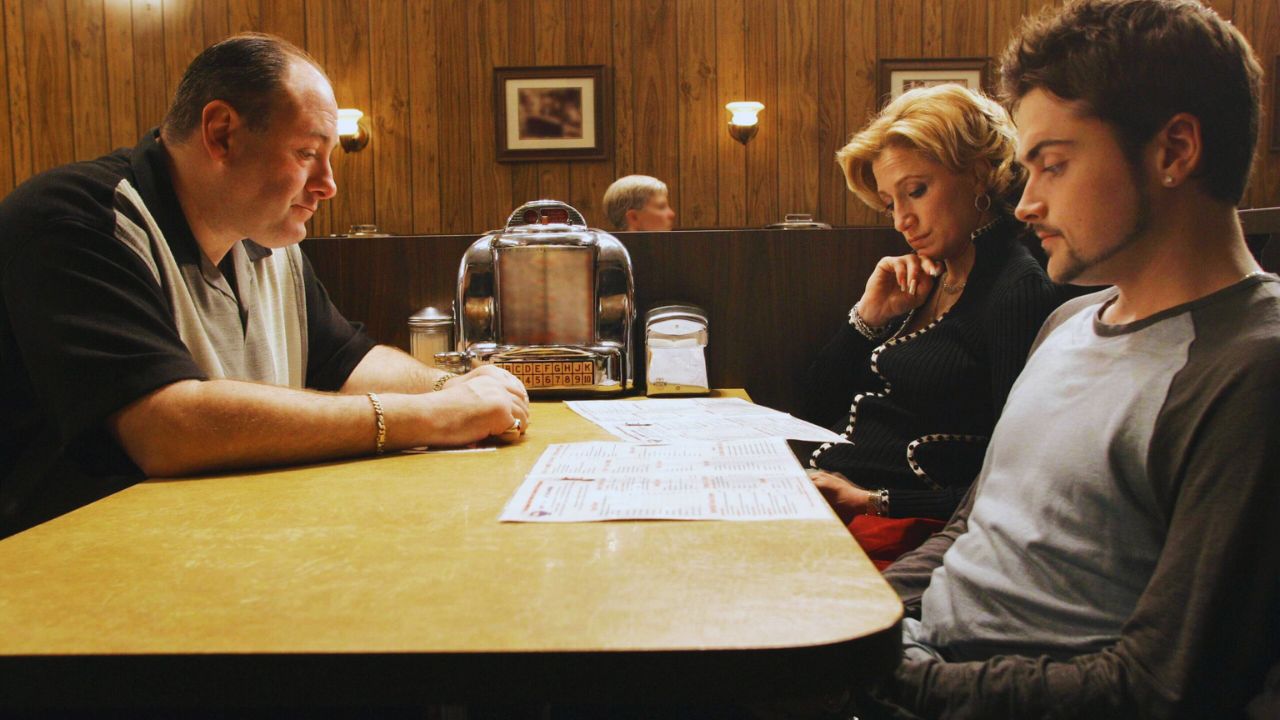
That plain setting matters because the final scene does not need darkness or obvious danger to feel unsafe. It puts violence beside routine, then lets Tony’s behavior make every ordinary detail feel loaded.
Tony Is Watching Before Anything Happens
Tony chooses his seat, checks the entrance, and keeps looking up whenever someone moves near the booth. He is not acting like a man who can enjoy a simple meal.
Years of loss and retaliation have trained him to treat strangers as possible danger. His vigilance becomes the viewer’s attention, so the room starts to feel threatening before the plot gives a reason.
The Bell Changes What Arrival Means
Each time the diner door opens, a bell rings and the editing returns to Tony. Carmela arrives, then AJ, and nothing happens, but the pattern keeps tightening.
By the time Meadow is close to the entrance, the small sound has become a warning rather than background noise. This is why the scene creates so much suspense from people simply walking through a door.
The Black Screen Removes the Answer on Purpose
The final cut to black takes away the things television usually gives an audience: image, sound, music, and confirmation.
It lands precisely when viewers expect the scene to clarify who is safe and what happens next. The blackout works because it denies control and makes uncertainty the final experience.
Silence Becomes More Disturbing Than a Visible Attack
There is no gunshot, scream, reaction shot, or last line to soften the moment. The song disappears with the picture.
Viewers are left alone with the break in the scene. The silence becomes the final shock, because the audience has to imagine what the show does not display.
It Feels Complete Without Being Fully Solved
One reading says Tony is killed; another says he lives and remains trapped inside constant fear. If he dies, the blackout may suggest an end that arrives without warning.
If he lives, it captures the paranoia that has become his ordinary condition. The scene’s real point is not a hidden answer but the pressure of never knowing when danger will arrive.
Also Read: Dark The Complete Story Explained: What Really Happens in This Series
The Death Reading Has Strong, Careful Clues
The finale gives viewers real reasons to believe Tony is killed, but it never turns those details into proof.
The man in the Members Only jacket receives unusual attention, watches the room, and later moves toward the bathroom. That makes the death theory persuasive while protecting the episode’s larger ambiguity.
Bobby’s Earlier Line Hangs Over the Diner
Earlier, Bobby tells Tony that a person may not even hear death coming. The line comes back to the viewer. The finale suddenly removes sound altogether. It becomes possible foreshadowing, not a final verdict, which is exactly why fans continue to debate it.
The Editing May Follow Tony’s Point of View
The scene repeatedly connects the bell, Tony’s face, and the view of whoever has entered. When the final bell rings, the expected image never comes.
The screen goes black. Yet the episode refuses to confirm the point-of-view reading, leaving it compelling but not certain.
Survival Would Be Its Own Punishment
The survival reading can be just as bleak. Tony may leave Holsten’s alive, but every dinner, stranger, doorway, and delay would still carry the possibility of retaliation.
The scene lets viewers share that tension for a moment instead of explaining it through dialogue. In that sense, the blackout becomes a brief experience of Tony’s paranoia and fear.
His Family Cannot Make the Room Safe
Carmela and AJ are beside Tony, while Meadow is expected any moment. Their presence should make the diner warm, yet the family table feels fragile because it cannot erase the danger he has brought close to them.
Tony’s past decisions sit in the booth with them. The final meal shows how family comfort and consequence can exist together without cancelling each other out.
Meadow’s Parking Problem Stretches the Final Seconds
Meadow’s delay is awkward, almost funny, which makes it sharper. Everyone is waiting for her to complete the family picture, but the show keeps postponing that ordinary moment. Her failure to arrive turns a minor inconvenience into suspense.
It is a tiny piece of timing with major emotional weight, because the ending interrupts the family before it can become whole.
The Music Makes Familiarity Feel Cruel
“Don’t Stop Believin’” belongs to cars, bars, school events, and other public spaces where people expect easy recognition.
In Holsten’s, its hopeful energy clashes with the tension under the table. The song does not decorate the scene; it makes normal life feel suddenly exposed. Its optimism and the diner’s threat keep pulling against each other.
The Cut Interrupts More Than the Plot
The blackout ends the song before it can settle into a satisfying finish. That broken rhythm is why the finale feels physical rather than merely puzzling.
Viewers are denied not only an answer but a completed emotional beat. The blackout leaves an absence and a deep sense of expectation.
What to Notice on a Rewatch
A rewatch works best when you follow the scene’s rhythm instead of hunting for one secret clue. Watch the door, listen for the bell, and notice which strangers receive extra attention. These details show how editing and sound turn a diner into a pressure chamber:
- The bell becomes a repeated warning.
- Meadow’s delay keeps the family incomplete.
- The blackout interrupts Tony and the viewer.
The Final Scene Leaves Tony With His Consequences
The Sopranos finale lasts because it makes consequence feel immediate without explaining it away. The bell, the stranger, the song, Meadow’s delayed entrance, and the black screen all point toward the same truth: Tony cannot separate a quiet dinner from the life he has made.
On a second viewing, focus less on securing a verdict and more on how each ordinary detail gathers pressure around Tony in the final seconds. The ending does not close his world neatly; it leaves the viewer inside it, waiting for something that may never be shown at all.